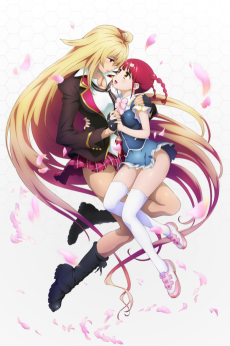
Valkyrie Drive: Mermaid
📺Anime Details
📝Editorial Analysis
The salt hangs thick in the air—damp, metallic, clinging to skin like a second layer—as a girl staggers backward on the crumbling seawall, her breath ragged, her uniform torn at the shoulder. Her hand trembles not from fear, but from the heat—a low, coiling pulse rising from her core, sudden and undeniable. Then it blooms: light, distortion, the soft shhhk of fabric parting as her body reshapes—not violently, but with eerie, liquid grace—her silhouette elongating, limbs sharpening, weapon manifesting not from nowhere, but from her, as if her very anatomy had been holding its breath until now. That moment isn’t about power—it’s about unfolding. A private, almost sacred rupture in the surface of self.
Valkyrie Drive: Mermaid doesn’t trade in spectacle for its own sake. Its action is intimate, even claustrophobic—swordplay that happens inches from flushed cheeks, battles staged in sun-bleached school corridors or mist-wrapped cliffs where every parry echoes with unspoken tension. The ecchi elements aren’t incidental; they’re structural—nudity isn’t titillation, it’s exposure: vulnerability made visible, boundaries dissolving not just between bodies, but between control and surrender, identity and transformation. The yuri undercurrent isn’t romantic shorthand—it’s the emotional gravity well around which everything orbits. You feel the weight of glances held too long, the hush before a confession that never quite lands, the ache of affection tangled with dependency, with danger, with the sheer physical cost of power drawn from another woman’s touch. It makes you feel tremulous—like standing barefoot on warm tile right after stepping out of a shower, skin alive, senses raw, heart beating just shy of panic.
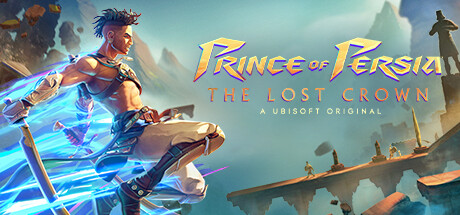
That tremulousness—the delicate balance between intimacy and instability—is why Prince of Persia resonates so deeply. Its description cites Romance & Shoujo, Action Spectacle, and Melancholic Exploration—not as separate boxes, but as interwoven textures. Like Valkyrie Drive: Mermaid, it frames action as emotionally charged ritual: acrobatics aren’t just flips—they’re extensions of longing, of regret, of time slipping through fingers. The player review notes it’s “an all-new epic journey” built on “a new prince, new lands and a brand new story”—echoing how Mermaid’s island setting feels both insular and mythic, a world where every cliffside duel carries the quiet sorrow of something irrevocably changing. The melancholy isn’t despair—it’s the weight of connection, the way love and loss fold into the same motion.
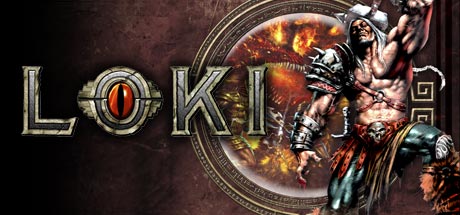
Then there’s Loki, tagged with Mythology & Folklore and Action Spectacle. Its description positions it as “a fantasy voyage through the great mythologies,” letting players embody heroes “drawn from different mythology.” That mythic scaffolding mirrors Mermaid’s own logic: powers aren’t tech or magic—they’re bodily myths, inherited, gendered, tied to lineage and touch. The player review calls it “similar to Diablo… filled with annoying glitches and game crashes,” but what matters is the intent: a world where identity is archetypal, where transformation is sacred and perilous, where your strength literally comes from stepping into a role older than memory. Like Mermaid, Loki treats power as inheritance—and burden—as something worn in the flesh.
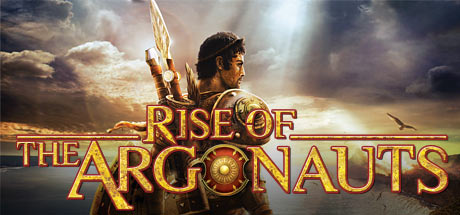
And Rise of the Argonauts, also scoring 82 on Mythology & Folklore and Action Spectacle, grounds myth in visceral stakes: Jason’s kingdom, his fiancé’s death, his vow to “restore her life.” The player review praises how it “does [ancient history] right”—but what’s striking is the emotional architecture: grief as engine, devotion as compass, sacrifice as currency. Mermaid operates on the same axis—every henshin, every shared power surge, every whispered secret is a variation on that vow: I will hold you together, even if it unravels me. The action isn’t flashy—it’s ritualized consequence.
This pairing isn’t for fans of “strong female leads” as a trope. It’s for the person who watches a slow-motion sword clash and feels their throat tighten—not at the steel, but at the way one girl’s eyes flicker, just once, to the other’s hand before the strike lands. It’s for the player who pauses mid-combat in Jedi Academy, not to adjust controls, but to stare at their Padawan’s idle animation—the slight tilt of the head, the way light catches the curve of the jaw—and wonders what kind of quiet, fierce love could grow in the shadow of a lightsaber’s hum. It’s for those who understand that the most electric moments aren’t explosions or declarations—but the breath held between them.
🎮30 Games That Match the Vibe





Match Dimensions Explained
❓Frequently Asked Questions
Why is Prince of Persia listed as similar to Valkyrie Drive: Mermaid when they seem so different?
Great question — it’s not about the surface plot, but the shared 'Romance & Shoujo' + 'Melancholic Exploration' dimensions. Like Mermaid’s tense, emotionally charged beachside isolation and slow-burn character bonds (e.g., Mirei and Rin’s fraught dependency), Prince of Persia leans into quiet, atmospheric storytelling — think the Prince silently navigating ruined palaces while flashbacks reveal his fractured relationship with Kaileena, or that haunting, rain-soaked temple sequence where memory and loss blur. The 84-score reboot doubles down on this poetic pacing and emotional weight, not just action.
Is there an anime or manga adaptation of Loki that explains its Valkyrie Drive: Mermaid connection?
No — Loki (2007) is a standalone fantasy action RPG inspired by global mythologies, not an adaptation of any anime/manga. Its 'Valkyrie Drive: Mermaid' match comes purely from shared 'Action Spectacle' intensity and mythic framing — like how Mermaid’s mermaid transformations echo Loki’s four myth-based heroes (e.g., the Norse fighter’s Ragnarök-themed combat animations or the Egyptian hero’s Anubis-empowered finishers). The player review even calls it 'similar to Diablo', which hints at that same over-the-top, crowd-clearing spectacle fans love in Mermaid’s synchronized battle sequences.
How does Rise of the Argonauts compare to Valkyrie Drive: Mermaid in terms of female-led mythic storytelling?
Rise of the Argonauts isn’t female-led — Jason’s the sole protagonist — but it matches Mermaid’s 'Mythology & Folklore' + 'Action Spectacle' DNA through tone and structure. Think of Mermaid’s island-as-mythic-arena vibe: Rise mirrors that with Iolcus as a crumbling, ritual-heavy kingdom where every quest ties to Greek gods (e.g., sacrificing at Hera’s altar before boarding the Argo, or battling Medusa’s gaze in a fog-draped grove). The 82-score review nails it: 'If you love games based on ancient history this one does it right' — same immersive, lore-dense gravitas as Mermaid’s oceanic folklore and cursed mermaid lore.
What’s the best game like Valkyrie Drive: Mermaid if I want that mix of stylish combat, romantic tension, and tactical group synergy?
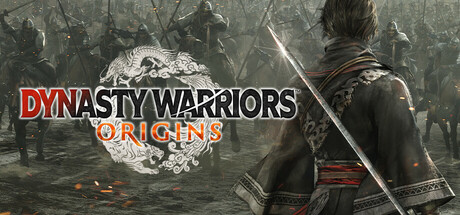
DYNASTY WARRIORS: ORIGINS is your best bet — it’s the *only* match hitting both 'Romance & Shoujo' *and* 'Tactical Warfare' (plus 'Action Spectacle'). Like Mermaid’s synchronized Siren combos between Mirei and Rin, ORIGINS lets you chain officer abilities mid-battle — say, using Zhao Yun’s lightning charge to set up Lady Sun’s crowd-control fan attack, all while flirtatious dialogue options deepen their bond during camp scenes. It’s not ecchi, but the chemistry-driven squad dynamics and cinematic battlefield choreography hit that same exhilarating, emotionally charged rhythm.