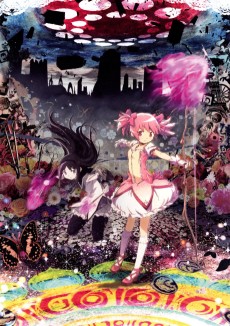
Puella Magi Madoka Magica the Movie Part 2: Eternal
The second movie in the Madoka tetralogy. It is a recap of the last four episodes of the series.
📺Anime Details
📝Editorial Analysis
The air in the hospital room is thick—not with antiseptic, but with silence that hums. Madoka sits beside Sayaka’s bed, fingers resting lightly on the blanket, watching her breathe. Outside the window, cherry blossoms fall in slow motion, each petal suspended mid-air like a held breath. Time isn’t broken here—it’s fractured, tender, and unbearably fragile. This isn’t nostalgia. It’s the weight of memory folding back on itself, pressing down until the present feels like a thin membrane over an abyss of what was, what could’ve been, what had to be undone.
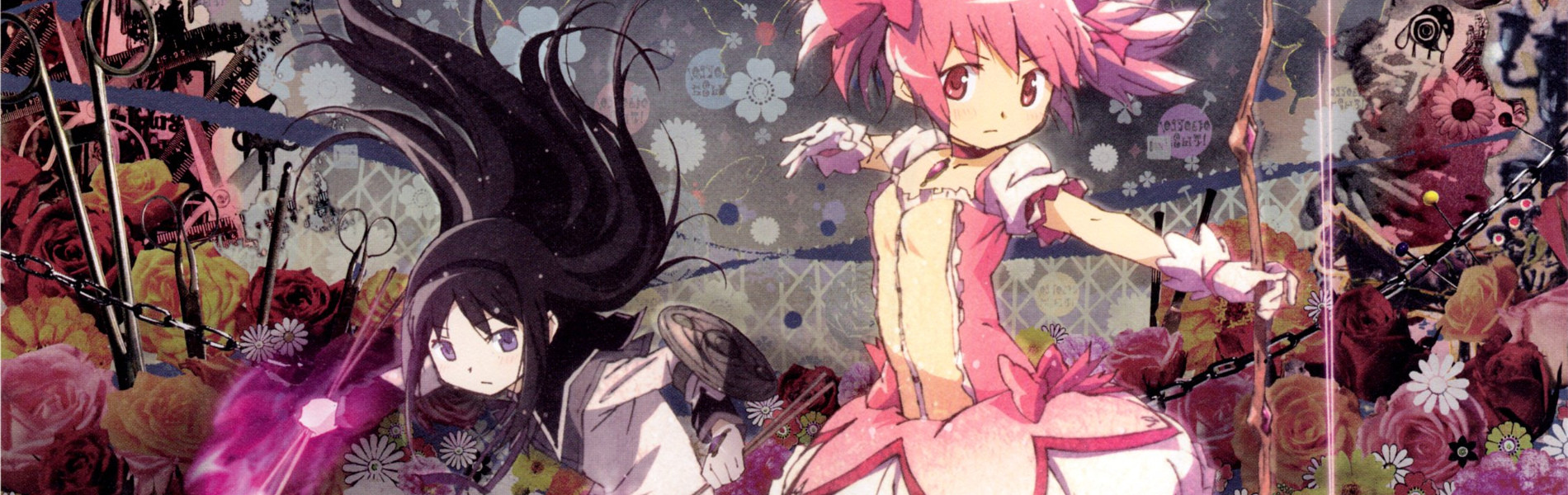
Puella Magi Madoka Magica the Movie Part 2: Eternal doesn’t move forward—it retraces. Not as recap, but as ritual: four episodes distilled into a single, aching incantation. The horror isn’t in the witches’ grotesque forms or the blood on the pavement—it’s in the quiet before Homura’s hand closes around the bow, in the way Mami’s teacup trembles just once before shattering, in the unbearable clarity of a child realizing she must choose between love and logic, between self and salvation. This is cosmic horror dressed in pastel ribbons and school uniforms—where the universe isn’t indifferent, but grieving, and every magical girl’s contract is a whispered suicide note signed in starlight. You don’t feel empowered watching it. You feel witnessed. And that witnessing leaves you hollowed out, then strangely, quietly, full.
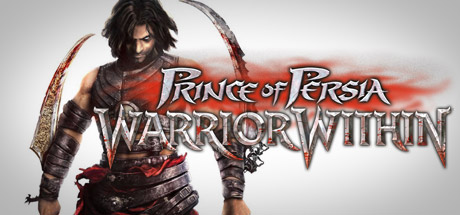
That same resonance lives in Prince of Persia: Warrior Within—not in its acrobatics or swordplay, but in the Dahaka chase. That relentless, shadow-thing breathing down your neck isn’t just a boss; it’s time made manifest as consequence—inescapable, patient, inevitable. The player review calls it “goated,” yes—but what makes it goated is how it mirrors Homura’s loop: no matter how fast you run, how cleverly you dodge, the Dahaka remembers. It knows your path. It is your past, sharpened to a blade. Like Homura resetting the world again and again, the Prince doesn’t outrun fate—he collides with it, over and over, until the only victory is understanding why he ran at all.
Then there’s Prince of Persia: The Two Thrones, where the Prince returns to Babylon not as a hero, but as a man infected—his body splitting between light and darkness, his voice echoing with another’s. The description says he finds his homeland “ravaged by war”—but the real devastation is interior: the duality isn’t metaphorical. It’s physiological. Just like Madoka’s final choice isn’t transcendence—it’s splintering: her consciousness dissolving into the fabric of causality so that every magical girl, everywhere, might catch a falling breath. Both stories treat identity as unstable ground, where saving others demands sacrificing coherence—and the player review’s quiet reverence (“one of my best childhood games… still plays great”) speaks to how deeply this kind of emotional erosion sticks.
And BioShock Infinite—its description names Booker DeWitt’s debt, his mission to “rescue Elizabeth,” but the game’s soul lives in the tear. Not the spectacle of floating cities, but the moment reality peels open and you see all the versions of yourself, standing in judgment. The player review acknowledges the bitterness some hold—but insists, “after…”—as if the catharsis arrives not despite the ambiguity, but because of it. Like Madoka’s godhood, Elizabeth’s power isn’t control—it’s recognition. Seeing every wound, every lie, every version of love and loss—and choosing, anyway, to reach across the fracture.
This isn’t about matching aesthetics or plot beats. It’s about shared gravity: the way time isn’t a river but a wound that reopens; the way memory isn’t archive but haunting; the way hope isn’t brightness, but the trembling hand that holds a bowstring one last time. These pairings belong to the person who replays a game not for mastery, but to sit again with the ache of a particular corridor, a specific line of dialogue, the exact shade of light on a crumbling wall. They’re for the viewer who watches Homura’s final smile—not as triumph, but as surrender—and feels their chest tighten, not with sadness, but with recognition. For those who know that the most devastating magic isn’t in the spell, but in the silence after it’s cast.
🎮28 Games That Match the Vibe




Match Dimensions Explained
❓Frequently Asked Questions
Why is Prince of Persia: Warrior Within recommended for fans of Madoka Magica Part 2: Eternal?
Because both dive deep into trauma, inevitability, and fighting a relentless force you can’t outrun—just like Madoka’s spiral into despair and Homura’s time-looped desperation, Warrior Within traps you in a brutal cat-and-mouse chase with Dahaka, a literal embodiment of fate that pursues you across crumbling ruins and blood-soaked underworlds. The game’s oppressive tone, morally gray choices, and constant tension around memory and consequence hit the same dark-seinen nerve as Eternal’s hospital scenes and Homura’s fractured resolve.
Is there a Madoka Magica mobile game or official video game adaptation?
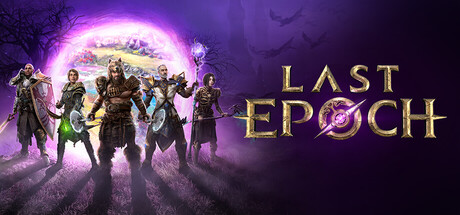
No—there’s never been an official Puella Magi Madoka Magica video game adaptation, not even for Part 2: Eternal. All current ‘games like’ recommendations (like Prince of Persia: The Sands of Time or BioShock Infinite) are thematic matches only—they share dimensions like Time & Memory and Adult & Dark Seinen, but no characters, story beats, or licensed assets from the anime. Fans have waited over a decade; the closest thing remains fan-made visual novels or rhythm games like *Magia Record*, which isn’t tied to the movie.
How does Prince of Persia: The Two Thrones compare to BioShock Infinite for Madoka Magica fans?
Two Thrones leans harder into visceral action and identity fracture—like when the Prince battles his own darker self (the Vizier-possessed alter ego) amid Babylon’s war-torn streets—mirroring Homura’s duality and the film’s split between idealism and ruthless pragmatism. BioShock Infinite trades combat for haunting narrative recursion and multiverse grief (Elizabeth’s tears, Booker’s guilt), echoing Madoka’s themes of sacrifice and rewritten timelines—but lacks the sword-swinging catharsis that makes Two Thrones feel like a spiritual sibling to Eternal’s final, desperate battle sequences.
What’s the best game like Madoka Magica Eternal if I want that melancholic, time-loop dread vibe?
Prince of Persia: The Sands of Time is your strongest match—it’s built on rewinding time to undo mistakes, just like Homura’s loops, and its desert ruins echo the film’s desolate, dreamlike liminal spaces (think the hospital hallway or the void between timelines). That iconic dagger mechanic—where you literally hold death at bay by spinning back seconds—creates the same breathless, fragile hope and crushing regret that defines Eternal’s emotional core, especially during quiet moments before catastrophe strikes.