
Sentenced to Be a Hero
In a world where heroism is a punishment, Xylo Forbartz, a condemned goddess killer, battles endless hordes of monstrous abominations as part of Penal Hero Unit 9004. Death is no escape, only a cycle of resurrection and relentless combat. But when Xylo encounters a mysterious new goddess, their unlikely alliance sparks a rebellion that could shatter the chains of eternal punishment.
(Source: Crunchyroll)
Notes:
Initially scheduled to air in October, 2025
📺Anime Details
📝Editorial Analysis
The first time Xylo Forbartz dies, it’s not heroic—it’s grinding. His ribs cave inward under a demon’s claw, his vision whites out, and then—click—he’s back on his knees in the mud, coughing blood that’s already clotting, armor re-sealed, breath ragged but required. No fanfare. No fade to black. Just the hollow thunk of a resurrection rune activating in his collarbone, and the distant, unblinking gaze of a surveillance god watching from the spire above. That moment isn’t about stakes—it’s about weight: the weight of a body that refuses to stay dead, the weight of a crime (killing a goddess) that can’t be absolved, only repeated.

This isn’t grimdark for spectacle’s sake. It’s exhaustion with theological consequences. The world of Sentenced to Be a Hero doesn’t feel like fantasy—it feels like penal infrastructure. Medieval castles aren’t majestic; they’re fortified courthouses. Gods aren’t benevolent or capricious—they’re juridical entities, their temples doubling as tribunal chambers where verdicts are etched into flesh. Every battle is less a clash of ideals and more a mandatory labor shift: hordes of abominations aren’t evil—they’re sentenced, too, just like Xylo. The gore isn’t shock value; it’s bureaucratic residue—the splatter left behind when systems grind human lives into expendable components. You don’t hope Xylo wins—you *wonder how long his nervous system can hold before it stops flinching at the sound of his own resurrection chime.
That emotional DNA—institutional dread, moral recursion, rebellion born not of righteousness but sheer, ragged refusal to be processed—pulses through several games, not because they share lore, but because they share texture. Take Assassin's Creed™: Director's Cut Edition: its description calls it a “Political Thriller” set in a “Dark Fantasy” Jerusalem—but read between the lines: it’s about an assassin whose entire identity is a construct of a rigid, invisible hierarchy, trained to kill because the system demands continuity, not justice. A player review admits the models are dated, yet says “no issues with me”—because what lingers isn’t the fidelity, but the claustrophobia of surveillance, the way every rooftop perch doubles as both vantage and cage. Like Xylo, Altaïr doesn’t fight for freedom—he fights to redefine the terms of his sentence, one blade-strike at a time.
Then there’s Vampire: The Masquerade - Bloodlines, tagged “Dark Fantasy, Neon Noir”, described as blending “traditional RPG elements with… brutal combat”. Its player review urges you to buy it on GOG—not for nostalgia, but because the game requires patching just to function, mirroring Xylo’s reality: the world is broken by design, and survival means jury-rigging your own tools inside a collapsing framework. You’re not a chosen one—you’re a disgraced clan member, exiled, hunted, forced to negotiate with demons who wear Armani suits and quote Machiavelli. The neon noir isn’t aesthetic—it’s the glare of fluorescent hypocrisy reflecting off wet pavement as you choose whether to betray your sire or let another district burn. That same weary calculation, that sense of being perpetually off-balance in a rigged system, hums in every frame of Penal Hero Unit 9004’s barracks.
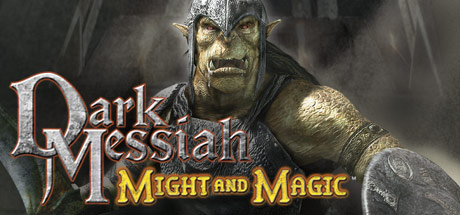
And Dark Messiah of Might & Magic, with its “Emotional Narrative” tag and description promising “ferocious combat in a dark and immersive world”, lands even closer: a player calls it “a fantastic melee combat game that still holds up”, then immediately pivots to the labor of engagement—“it needs a patch to get the game running properly”. That tension—between raw, visceral physicality (Xylo’s axe biting through chitin, the crunch of bone under boot) and the emotional toll of persistence—is identical. You don’t master the combat; you endure it. Each parry, each dodge, each resurrection feels earned not by skill alone, but by refusing to let your hands stop shaking.
Who would love these pairings? Not just fans of “dark fantasy”. Think of the person who rewatches the scene where Xylo silently cleans dried gore from his gauntlet—not for cleanliness, but because ritual is the only thing holding his mind together. The one who pauses The Witcher 3 not at the big battles, but when Geralt stares at a child’s abandoned doll in a war-torn village, knowing he’ll walk past ten more before sunset. The player who boots up Bloodlines, not for the vampires, but for the way the dialogue tree forces you to lie just enough to survive another night—because truth, like mercy, is a luxury the system revoked long ago. These are stories for people who recognize resilience not as triumph, but as the quiet, stubborn act of breathing while chained—and who find something deeply human in the crack where the chains rub raw.
🎮38 Games That Match the Vibe









Match Dimensions Explained
❓Frequently Asked Questions
Why does Sentenced to Be a Hero feel so much like Vampire: The Masquerade – Bloodlines?
Both lean hard into that brooding, morally gray Neon Noir + Dark Fantasy vibe—think neon-drenched alleyways, cynical dialogue, and choices that stain your soul rather than just shift quest outcomes. You’ll recognize the same weighty tone in Bloodlines’ Malkavian district missions or when confronting the Kindred hierarchy, just like how Sentenced makes you negotiate with corrupt guilds while your hero’s ‘sentence’ slowly warps their identity.
Is there a Sentenced to Be a Hero anime or manga adaptation?
No—there isn’t any official anime, manga, or live-action adaptation (yet!). Unlike The Witcher series—which spun off into Netflix shows and comics after its games blew up—Sentenced to Be a Hero remains purely a game-first IP. That said, fans often compare its emotional gut-punches and tragic character arcs to The Witcher: Enhanced Edition Director’s Cut, especially Geralt’s early moral compromises in Vizima.
How is Assassin’s Creed: Director’s Cut Edition different from Dark Messiah of Might & Magic for someone who loves tactical melee combat?
Assassin’s Creed leans into parkour-driven stealth and timed counter-kills in crowded Damascus markets—less about weapon weight, more about rhythm and positioning. Dark Messiah, meanwhile, gives you full physics-based dismemberment, environmental takedowns (like kicking enemies down wells), and spell combos that feel visceral and chaotic, much like Sentenced’s ‘heroic punishment’ mechanics where your powers escalate dangerously with each choice.
What’s the best game like Sentenced to Be a Hero if I want something deeply emotional but still dark and gritty?
Go straight to The Witcher 3: Wild Hunt—especially the Bloody Baron questline, where grief, guilt, and impossible choices hit with the same quiet devastation as Sentenced’s courtroom scenes or your protagonist’s slow unraveling. The Witcher: Enhanced Edition Director’s Cut also nails it early on: Geralt’s strained relationship with Yennefer and the consequences of his past decisions mirror Sentenced’s core tension between duty and selfhood.