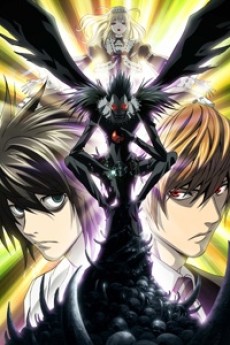
Death Note: Relight
A two hour episode of Death Note, mainly a compilation of the confrontations between Light and L, re-edited from Ryuk's perspective with new dialogue and soundtrack along with additional animation that could not be included in the original series. An Unnamed Shinigami comes to Ryuk to question him about his new story in the human world.
Eru o Tsugu Mono (L's Successors)
This story continues where the previous left off, continuing the story of Light. As the previous special told Light and L's battles, this story does the same with the conflicts between Light, Mello, and Near.
(Source: Wikipedia)
📺Anime Details
📝Editorial Analysis
The fluorescent hum of a Tokyo apartment at 3:47 a.m. Light Yagami sits perfectly still, spine straight, eyes locked on the ceiling—not sleeping, not blinking—while Ryuk’s shadow stretches long and jagged across the wall, his apple half-eaten, his grin unreadable. That silence isn’t empty. It’s charged, thick with the weight of a god who’s forgotten he’s human—and a shinigami who’s watching him remember it, just to see what breaks first.





That’s the core feeling of Death Note: Relight: not suspense as adrenaline, but anticipation as erosion. It’s the slow, quiet unraveling of certainty—yours, Light’s, L’s—filtered through Ryuk’s detached, almost bored gaze. The re-edit doesn’t add plot; it deepens perspective. Every stare-down between Light and L becomes a theological standoff disguised as deduction. The new soundtrack doesn’t swell—it withholds, letting breaths hang too long. The added animation isn’t flashier; it’s closer: a twitch in Light’s thumb, the faintest tremor in L’s knuckles as he balances on his chair. You don’t feel like you’re solving a mystery—you feel like you’re witnessing cognition under divine pressure, where every correct answer makes the world smaller, colder, more absolute. It’s not about good vs. evil. It’s about the loneliness of omniscience, the hollowness behind the word justice when spoken by someone who’s stopped needing witnesses.
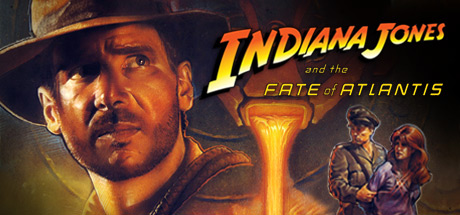
Which is why Indiana Jones® and the Fate of Atlantis™ lands with such uncanny resonance. Its description places us in 1939, on the brink of war, chasing a weapon “more dangerous than the atom bomb”—not firepower, but ideological supremacy, a myth made real. Like Light, Indy isn’t just hunting an object—he’s racing against a corrupted vision of order, one that promises salvation through absolute control. The player review calls it “an archaeological wonder trapped in amber”—and that’s precisely how Relight feels: a moment of intellectual combat fossilized in amber, where every clue is a shard of shattered morality. Both works treat knowledge as a contagion, and discovery as a kind of falling.
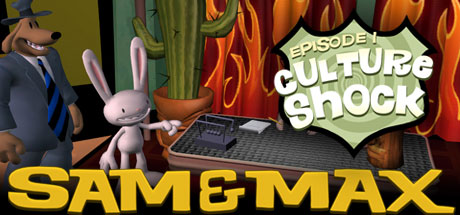
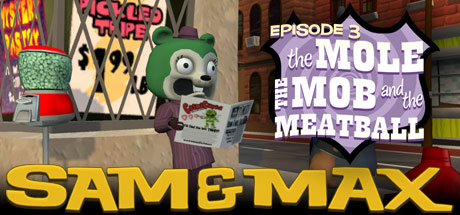
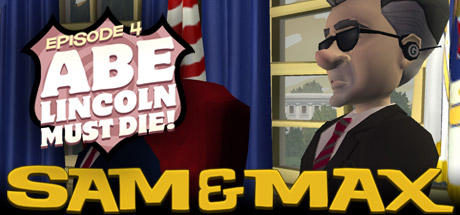
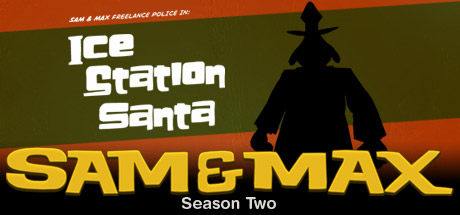
Then there’s the Sam & Max series—specifically 103: The Mole, the Mob and the Meatball, 104: Abe Lincoln Must Die!, and 201: Ice Station Santa, all sharing that exact 81 score and the same dimensional tags: Mystery & Detective, Adult & Dark Seinen. At first glance, the tonal whiplash seems irreconcilable—cartoon violence, puns, Santa as a “hairy, bloated, pagan God.” But read deeper. Their descriptions all orbit institutional collapse: a mafia-run playland, a president unhinged by federal mandates, Christmas itself weaponized. The player reviews—even the fragmented ones—keep circling back to reboot, legendary, originals. That’s the link: Relight is itself a rebooted original, a re-contextualization that exposes the absurdity beneath the gravitas. Light’s god complex isn’t undermined by humor in Relight—it’s heightened by Ryuk’s indifference, the same way Sam & Max’s chaos throws into relief how brittle any authority (presidential, divine, or mob-boss) really is. When the review says “Santa Claus!... a hairy, bloated, pagan God”, it’s not parody—it’s recognition: gods wear many costumes, and the scariest ones hand out presents while rewriting reality.
This pairing isn’t for fans of “smart thrillers” or “detective games.” It’s for the person who pauses mid-episode of Relight, rewinds Ryuk’s line “I didn’t expect you’d go this far… but I’m not surprised”, and chills—not because it’s ominous, but because it’s true. It’s for the player who boots up Fate of Atlantis, not for the whip cracks, but for the way Indy’s voice tightens when he realizes the Nazis aren’t just stealing artifacts—they’re trying to edit history’s source code. And it’s for the one who laughs at Sam yelling “Abe Lincoln must die!”, then sits very still afterward, because the joke isn’t about assassination—it’s about how easily sanity, legacy, truth become negotiable when power gets bored. These are stories for people who feel the weight in silence, who taste irony like copper, and who know that the most terrifying confrontations aren’t fought with fists—but with a single, unblinking, perfectly logical sentence.
🎮29 Games That Match the Vibe






Match Dimensions Explained
❓Frequently Asked Questions
Why does Indiana Jones and the Fate of Atlantis feel so much like a Death Note psychological duel?
Because it’s all about high-stakes mind games—like when Indy outwits Nazi archaeologist Vogel in the Atlantis caverns, using misdirection and timed dialogue choices instead of brute force. That same tense, cerebral back-and-forth mirrors Light vs. L: you’re not just solving puzzles—you’re anticipating your opponent’s logic, bluffing under pressure, and racing against a ticking ideological clock.
Is there a Death Note video game adaptation I can actually play right now?
No official Death Note game exists on modern storefronts—and none of the titles in this match list are adaptations. All five are *spiritual* matches only: Indiana Jones® and the Fate of Atlantis™ and the Sam & Max episodes (101, 103, 104, 201) earn their ‘Dark Seinen’ tag through sharp writing, moral ambiguity, and detective work—not licensed characters or plotlines.
Sam & Max 103 vs. Indiana Jones: which one nails the ‘brilliant but unhinged investigator’ vibe better?
Sam & Max 103 wins for pure chaotic brilliance—think Max interrogating mob goons with a meatball cannon while Sam coldly deduces the mole’s identity from casino chip patterns. Indiana Jones is more grounded: his genius shines in quiet moments, like deciphering Atlantean glyphs under torchlight while Nazis close in—but he never loses his cool like Max does mid-chase through Ted E. Bear’s casino.
What’s the best game like Death Note: Relight if I want that late-night, morally gray detective mood?
Go straight to Indiana Jones® and the Fate of Atlantis™—it’s got that exact 1939 noir tension: shadowy alleys, morally compromised allies (like Sophia Hapgood), and scenes where Indy chooses between truth and survival—like letting a Nazi live to uncover the bigger conspiracy. The player review calling it ‘an archaeological wonder trapped in amber’ nails why it still feels so weighty and adult, just like Relight’s L-and-Light stare-downs.