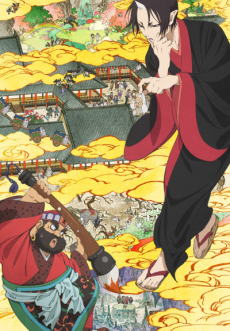
Hozuki's Coolheadedness
Hoozuki is the aide to the great king of Hell, King Enma. Calm and super-sadistic, Hoozuki tries to resolve the various problems in Hell, including a rampaging Momotarou and his companions. However, he also likes spending his free time on his hobbies, such as fawning over cute animals and raising "Goldfish Flowers."
(Source: Crunchyroll)
📺Anime Details
📝Editorial Analysis
The steam rises—not from a kettle, but from the bubbling cauldron of Hell’s administrative district, where Hoozuki stands perfectly still in a crisp black kimono, clipboard in hand, watching a goldfish-flower bloom slowly, deliberately, its petals unfurling like a bureaucrat signing off on a particularly tedious soul-transfer form. A rampaging Momotarou thunders past in the background, sword drawn, but Hoozuki doesn’t flinch—just adjusts his glasses, murmurs “How inefficient,” and returns to pruning a single, stubborn leaf. That quiet, simmering control—not over chaos, but alongside it—is the show’s heartbeat.
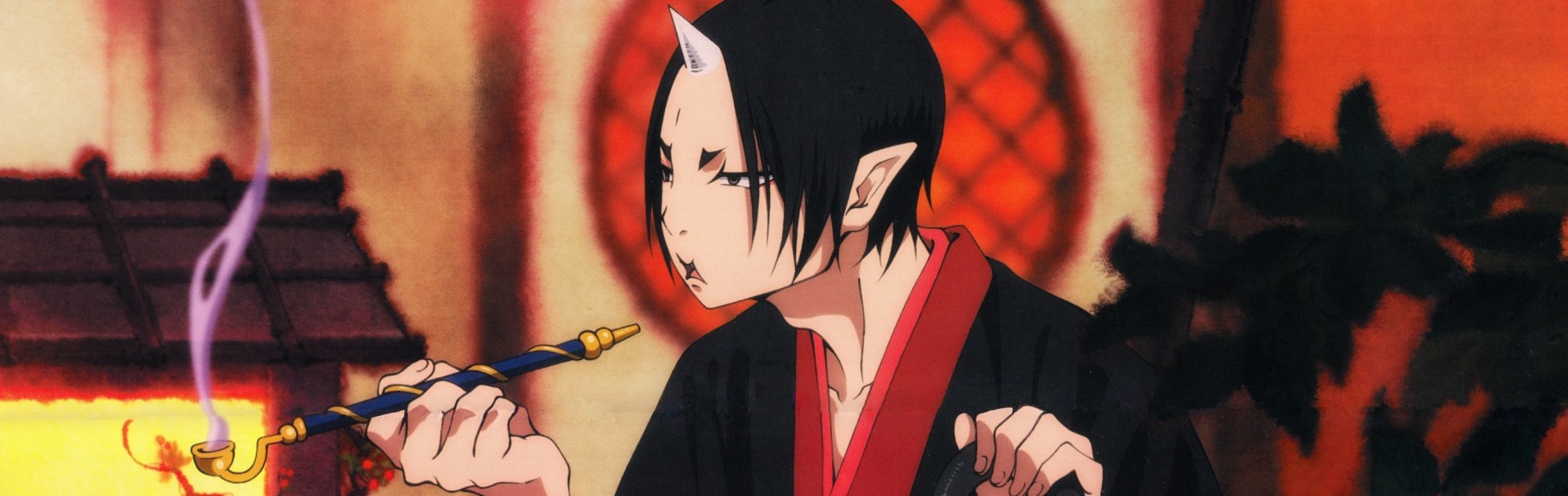
This isn’t the frantic, high-stakes dread of divine judgment or apocalyptic stakes. It’s the weight of routine in the afterlife: paperwork stamped beside demon-infested hot springs, tax audits conducted mid-exorcism, Enma-sama sighing over budget reports while a kappa tries to unionize the river spirits. The feeling is dry warmth—like sunlight through stained glass in a centuries-old temple office—where absurdity isn’t undercut by irony, but anchored by meticulousness. You don’t laugh at Hell; you laugh with Hoozuki as he calculates optimal koi-feeding ratios while a yōkai files a formal complaint about insufficient haunting hours. It’s melancholic precision: deeply aware of entropy, yet choosing, every episode, to water the flowers anyway.
Legendary resonates not because it shares demons or myth—but because it treats ancient beings not as awe-inspiring forces, but as sealed infrastructure. Like Hoozuki managing Hell’s aging bureaucracy, Legendary frames mythic creatures as dormant systems waiting for recalibration—not worship, but maintenance. Its PS3-era jank, praised in player reviews as “incredible… better than most games of the more modern era,” mirrors the anime’s aesthetic: deliberately analog, slightly creaky, full of tactile textures—ink-wash backdrops, paper-scroll UIs, the grind of gears turning beneath bureaucratic hellscapes. Both treat the supernatural with the same weary respect one gives a temperamental photocopier that also happens to be a minor deity.
Prince of Persia (the 2008 reboot) lands with uncanny kinship—not in its acrobatics, but in its melancholic exploration paired with deadpan comedy. The player review notes it’s “a new prince, new lands and a brand new story completely separate from the sands…”—just as Hozuki's Coolheadedness treats Japanese myth not as sacred text, but as rebooted workplace lore. When the Prince sighs at crumbling palaces or mocks his own destiny mid-backflip, it’s Hoozuki’s energy: competence worn like armor, humor as pressure valve. Both find beauty in decay—crumbling temples, cracked hell-gates—and respond not with despair, but with a quiet, pragmatic tenderness: polishing a rusted doorknob, re-potting a wilted flower, adjusting a crown askew.
Postal III, for all its surface chaos, shares the anime’s comedy-as-coping-mechanism DNA. Its description declares “Good or Insane? The choice is yours”—a line that could be Hoozuki’s internal monologue during a demonic labor strike. Player reviews call it “weird, but it’s postal, so everything is weird”—exactly how Hozuki's Coolheadedness operates: the weirdness isn’t the joke, it’s the setting; the punchline is Hoozuki’s unblinking focus on his bonsai while Champ the pitbull howls at a summoned oni. Both weaponize tonal whiplash—not to confuse, but to stabilize: when reality frays, the most absurd consistency becomes your compass.
This pairing sings to the viewer who keeps a spreadsheet of their houseplants and annotates folklore texts in the margins—who finds catharsis in the exact moment a bureaucrat stamps a form just so, or a game engine renders sweat on a prince’s brow mid-leap. It’s for the person who laughs hardest when the monster boy pauses mid-rampage to admire a butterfly—then files the incident report in triplicate. Not escapism. Not satire. Something rarer: devotion disguised as duty, wrapped in ink, steam, and the soft, stubborn click of a well-oiled gear turning—again, and again, and again.
🎮49 Games That Match the Vibe























Match Dimensions Explained
❓Frequently Asked Questions
Why is Legendary listed as similar to Hozuki's Coolheadedness when it's about Greek myths and not Japanese folklore?
Great question—it’s not about the *origin* of the myths, but how both treat divine bureaucracy with deadpan absurdity. In Legendary, Deckard navigates Pandora’s Box like a jaded civil servant processing ancient entities (think: paperwork for minotaurs), mirroring Hozuki’s exasperated management of hell’s red tape. The 'Mythology & Folklore' + 'Body Horror & Occult' overlap is real—both lean into grotesque yet bureaucratic supernaturalism, not just lore accuracy.
Is there an anime or game adaptation of Hozuki's Coolheadedness that captures its tone?
There’s no direct game adaptation—but Prince of Persia (2008) nails the same vibe: a weary, sarcastic protagonist (the new Prince) navigating surreal, rule-bound mythic realms while delivering dry one-liners mid-parkour. Its 'Melancholic Exploration' + 'Comedy & Parody' dimensions match Hozuki’s blend of existential sighs and slapstick—like when the Prince nonchalantly deflects sand demons while complaining about his hair.
How does Psychonauts compare to Postal III for Hozuki fans who love dark comedy and messed-up bosses?
Psychonauts leans into melancholic absurdity—Raz confronting trauma-fueled mental landscapes (like Coach Oleander’s militarized gym) with empathy and wit—while Postal III goes full unhinged satire: the Dude negotiating with a sentient, chain-smoking pitbull named Champ in a post-apocalyptic town called ‘Place.’ Both share 'Comedy & Parody' + 'Melancholic Exploration,' but Psychonauts has heart beneath the weirdness; Postal III has a shotgun and zero regrets.
What’s the best game like Hozuki’s Coolheadedness if I want something soothing but still weirdly bureaucratic?
Garry’s Mod is shockingly perfect for that mood—especially in community-made mods like 'Hell Office Simulator,' where you file demonic incident reports while physics glitches make imps tumble off desks. It shares Hozuki’s 'Comedy & Parody' + 'Melancholic Exploration' DNA: no goals, just low-stakes absurdity, quiet chaos, and the gentle exhaustion of managing nonsense. As one player put it: 'I never bothered writing a review… until I needed calm chaos.'