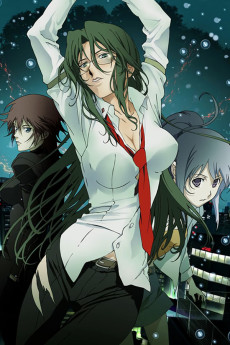
RIN ~Daughters of Mnemosyne~
📺Anime Details
📝Editorial Analysis
The rain in Shinjuku never washes anything clean—it just slicks the pavement with a greasy, iridescent sheen, reflecting neon signs that flicker like dying synapses. In Episode 3, Rin staggers into an alley after a bullet tears through her shoulder—not for the pain, but because her skin unzips where the wound opens: muscle fibers twitch, bone gleams wet and raw, then re-knits with a sound like wet rope snapping taut. She doesn’t scream. She breathes—slow, deliberate—and watches her own blood pool, black at the edges, before it’s absorbed back into her flesh like ink into blotting paper. That moment isn’t horror for shock’s sake. It’s recognition: this body is no longer hers to keep, only to endure.
What makes RIN ~Daughters of Mnemosyne~ vibrate at this particular frequency isn’t its ecchi framing or even its sci-fi scaffolding—it’s the weight of memory as physical decay. Every flashback arrives not as nostalgia, but as a violation: synapses misfire, organs reject their own history, faces blur mid-sentence because the brain refuses to hold them. The urban sprawl isn’t backdrop—it’s a nervous system made concrete, humming with surveillance, forgotten names, and the quiet dread that your next breath might erase the one before it. You don’t watch it to escape. You watch it to feel unmoored, to sit with the slow, sickening certainty that identity isn’t built—it’s leached, stolen, overwritten. There’s no catharsis in revelation—only exhaustion, and the chilling intimacy of being watched by time itself.
That same suffocating resonance lives in BioShock Infinite, where Booker DeWitt’s debt isn’t financial—it’s ontological. His mission to rescue Elizabeth isn’t just plot; it’s a desperate, looping attempt to outrun what his own mind has buried. The game’s description nails it: “Indebted to the wrong people, with his life on the line…”—that debt isn’t owed to loan sharks, but to causality. A player review admits, “I know that some people are still bitter about the Bioshock Infinite we could have gotten.” That bitterness mirrors Rin’s exhaustion—not at narrative twists, but at the sheer effort of remembering when memory is weaponized, when every truth you grasp dissolves under scrutiny. Both works treat time not as a river, but as a wound that won’t scab.
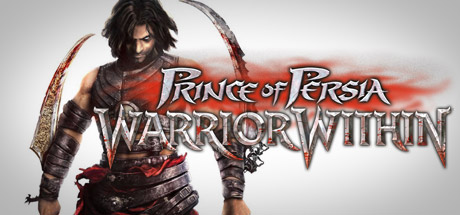
Then there’s Prince of Persia: Warrior Within, hunted not by men, but by Dahaka—an “immortal incarnation of Fate.” The description frames him as inevitable, metaphysical, inescapable. And the player review says it plainly: “dahaka chase is still as goated as it was before…”—not because it’s fun, but because it feels right: relentless, personal, bodily. Like Rin’s regeneration, Dahaka’s pursuit isn’t symbolic—he rips through walls, shreds armor, forces the Prince to run through his own past, corridors folding like scar tissue. Both confront the body as archive and battlefield: every scar, every stumble, every gasp is a record of what memory refused to delete.
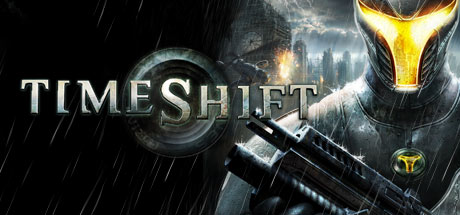
And TimeShift™—a “little 4 hour game” where Dr. Krone’s reckless Time Jump births a “disturbing alternate reality.” Its description doesn’t mention trauma, but the consequence is visceral: reality glitches, limbs distort, environments warp—not as spectacle, but as aftermath. A player notes it “takes a little work to get it into a playable state,” echoing how RIN demands patience with its dissonance: flickering timelines, abrupt tonal shifts, bodies refusing coherence. Both reject tidy chronology. They force you to inhabit instability—not as puzzle, but as condition.
This pairing isn’t for fans of “cool powers” or “twisty plots.” It’s for the person who pauses mid-gameplay when a character forgets their own name—not to check a wiki, but to stare at the screen, pulse quickening, because they’ve felt that gap. For the viewer who watches Rin’s eyes glaze over mid-conversation—not waiting for exposition, but holding their breath, knowing the silence before the memory snaps back will hurt more than any gunshot. It’s for those who don’t seek escape, but confirmation: that dread isn’t noise—it’s signal. That the most terrifying thing isn’t what’s out there—but how quietly, how thoroughly, the self can hollow out… and keep walking anyway.
🎮42 Games That Match the Vibe











Match Dimensions Explained
❓Frequently Asked Questions
Why does BioShock Infinite keep coming up in RIN recommendations when it’s not about immortality or time-traveling assassins?
Because both lean hard into fractured identity and memory as plot engines—RIN’s Rin unraveling her own past across centuries mirrors Booker’s suppressed guilt and Elizabeth’s fragmented timeline. The Luteces’ quantum paradoxes and RIN’s Mnemosyne-induced amnesia both weaponize unreliable recollection, and that Body Horror & Occult dimension shows up in the Siphon’s grotesque transformations just like Rin’s regenerative wounds and the Dahaka’s decay.
Is there an anime or visual novel adaptation of RIN ~Daughters of Mnemosyne~?
No official adaptation exists—RIN remains a standalone 2008 anime series with no game, manga, or VN spin-offs. That said, fans drawn to its vibe often pivot to Prince of Persia: Warrior Within for its similar tone: the Dahaka’s relentless pursuit echoes Rin’s immortal hunters, and the Prince’s time-bent trauma mirrors how RIN’s characters are haunted by memories they can’t escape—or erase.
How does Prince of Persia: Warrior Within compare to Last Epoch for RIN fans?
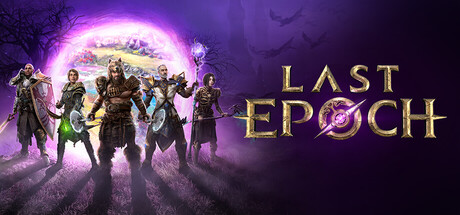
Warrior Within nails RIN’s oppressive, cyclical dread—the Dahaka hunting you across eras feels like Rin being stalked by her own past incarnations—while Last Epoch delivers the occult body horror through its corrupted skill trees and flesh-warping ‘Corruption’ system. Both share that 83-score Time & Memory + Body Horror & Occult combo, but Warrior Within leans cinematic and claustrophobic; Last Epoch goes systemic and loot-driven, like if Rin’s immortality had a talent grid.
What’s the best game like RIN if I want that slow-burn, melancholic romance with dark fantasy undertones?
Baldur’s Gate 3 is your answer—it’s the only match with Romance & Shoujo + Dark Fantasy, and scenes like Astarion’s tragic immortality arc or Shadowheart’s conflicted devotion hit that same bittersweet, centuries-long yearning RIN nails with Rin and Mimi’s bond. It won’t give you time manipulation, but the emotional weight, moral ambiguity, and gothic-tinged intimacy are spot-on.