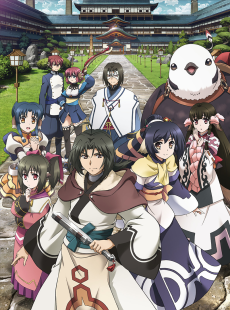
Utawarerumono The False Faces
When I came to, I realized I was standing in the middle of a vast, snowy plain I knew nothing of. I didn't know how I got there. And to add to that, I couldn't remember anything, not even my name. I stood there, dumbfounded at my absurd situation. But then, as if to spite me further, a gigantic monster suddenly appeared, an insect-like creature that began to bear down on me. I tried desperately to run, but it cornered me into a hopeless situation. It was then that the girl appeared. Her name was Kuon. It was this beautiful girl, who bore an animal's ears and tail, who saved my life.
(Source: Anime News Network)
📺Anime Details
📝Editorial Analysis
The wind cuts—sharp, thin, and utterly silent—across that endless white plain. You’re standing there, barefoot in snow that shouldn’t be survivable, breath pluming like a question mark you can’t answer. Your name is gone. Your past is a locked vault with no keyhole. And then—the screech. Not distant thunder, not a war cry—but the wet, chitinous shriek of something too large, too wrong, folding space as it descends. That moment isn’t fear alone. It’s disorientation so total it hollows out your chest. Then—her voice. Soft, certain, cutting through the insect’s roar like a blade sheathed in silk. Not “I’ll save you.” Just: “Stand still.”
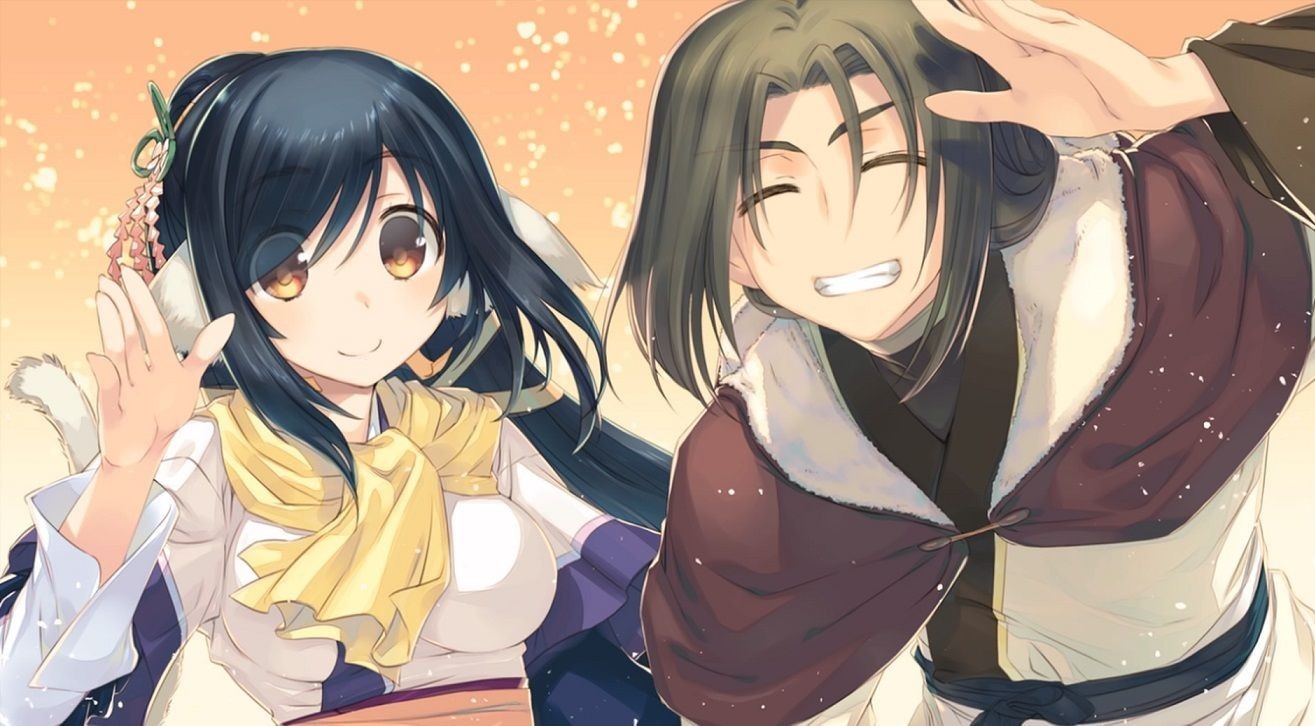
That’s the heartbeat of Utawarerumono The False Faces: not spectacle, but presence. Not world-building as exposition, but as weight—the weight of forgotten history pressing down on snow-dusted rooftops, of political treaties signed over tea that tastes faintly of ash, of kemonomimi ears twitching not for cuteness, but because they hear the tremor in a diplomat’s voice before he speaks. It makes you feel tenderly adrift: grounded in quiet domesticity one scene (a shared meal, a repaired roof tile), then yanked into the vertigo of conspiracy the next—where every ally might be a relic of a lost civilization, every peace treaty a countdown to war. It doesn’t ask you to choose between healing and horror. It insists they bloom from the same root.
Chains resonates—not because it’s fantasy or sci-fi, but because its physics-driven l—its insistence that connection must be felt, not just calculated—mirrors how Utawarerumono The False Faces builds trust. In the anime, bonds aren’t declared; they’re forged in the slow friction of shared chores, translated letters, the way a character pauses mid-sentence when another’s tail flicks nervously. Like linking bubbles until the chain holds, relationships here gain momentum only when alignment feels physical, inevitable. A player notes it’s “like connect 4 in nutshell”—and yes, the anime works the same way: simple actions (handing over a cup, mending a cloak) become structural supports. Nothing flashy. Just linking. Until the whole fragile lattice holds.
Stardew Valley lands deeper still. Its description says you inherit “your grandfather’s old farm plot” and must “learn to live off the land”—but the player review reveals the real ache: “Spent the first 2 years trying to do everything and never having enough time.” That’s the soul of Utawarerumono The False Faces’ post-apocalyptic tenderness. This isn’t a wasteland of rubble—it’s a world where people plant barley between artillery emplacements, where council meetings pause so someone can braid another’s hair, where survival isn’t just calories but continuity. The anime’s “Cute Girls Doing Cute Things” tag isn’t fan service—it’s resistance. Like watering crops at dawn while war drums echo in the valley below, those moments are acts of defiant slowness. They don’t ignore the politics—they anchor them.
And then there’s Disco Elysium - The Final Cut, where the player review quotes: “Capital has the ability to subsume all critiques into itself. Even those who would critique capital end up reinforcing it instead.” That’s the chilling echo in Utawarerumono The False Faces’ conspiracy layer—not shadowy villains, but systems so deeply woven into language, law, and even memory that rebellion risks becoming ritual. The amnesia isn’t just personal; it’s civilizational. Every recovered fragment of history in the anime carries that same irony: the more you uncover, the more you realize how thoroughly the lie was built into the grammar of survival. Disco Elysium’s detective stumbles through ideology like a man walking on cracked ice—he knows the truth is beneath him, but every step risks collapse. So does the protagonist of Utawarerumono The False Faces, whispering names he’s forbidden to remember into snow that swallows sound.
This pairing sings for the person who cries during a blacksmith’s montage and re-reads political treatises for fun—who needs their hope earned, not handed, and finds comfort not in escapism but in stories where tenderness is tactical, where healing is hard-won, and where the most revolutionary act is sometimes just choosing to sit quietly with someone else in the snow—and wait for the next word to come back.
🎮53 Games That Match the Vibe













Match Dimensions Explained
❓Frequently Asked Questions
Why is Stardew Valley listed as similar to Utawarerumono: The False Faces when they’re so different?
Great question—it’s not about combat or lore overlap, but the shared emotional core: slow-burn character intimacy and healing through daily ritual. Like watching Kuon tend her garden in the quiet moments between political upheaval, Stardew’s seasonal festivals, marriage events with characters like Maru or Sebastian, and even the way you slowly rebuild Pelican Town mirror Utawarerumono’s focus on found family and quiet resilience. Both use routine—not as filler, but as emotional scaffolding.
Is there an anime or visual novel adaptation of Disco Elysium that captures its Utawarerumono-like political depth?
No official anime or VN adaptation exists—but Disco Elysium *itself* delivers that layered political storytelling you love in Utawarerumono. Think of how Hulrik’s faction negotiations in Martinaise echo Kuon’s delicate diplomacy in Tira, or how the game’s ‘Inland Empire’ skill tree forces you to confront ideology the same way Utawarerumono makes you weigh loyalty vs. truth in scenes like the Council Chamber confrontation in Chapter 12. It’s all baked into the writing—no adaptation needed.
How does Mata Hari compare to Utawarerumono: The False Faces in terms of espionage and moral ambiguity?
Mata Hari leans hard into spy thriller tropes—double-crosses, coded messages, and tense stealth—but lacks Utawarerumono’s emotional weight and nuanced moral trade-offs. Where Utawarerumono makes you agonize over betraying a friend like Hakuoro for the greater good (like in the ‘Ashen Pact’ sequence), Mata Hari’s choices feel more transactional and less character-driven. Plus, its player reviews call it ‘une daube’—so while both involve espionage, only Utawarerumono delivers that soul-deep tension between duty and devotion.
What’s the best game like Utawarerumono: The False Faces if I want that melancholy, character-driven calm after heavy story beats?
Stardew Valley is your best bet—especially playing late-night in the mines or sharing tea with Robin in her carpentry shop. That hushed, reflective mood mirrors Utawarerumono’s post-battle lulls: think of Kuon sitting alone at the shrine steps after the fall of Kureha, or the soft piano theme during winter cutscenes. Even The Sims 4 can hit that note—customizing a cozy cottage for your Sim couple and watching them share silent meals—but Stardew’s seasonal rhythm and heartfelt NPC arcs (like Linus’s growth arc) land closest to Utawarerumono’s healing cadence.