
Hellsing Ultimate
Hellsing, a secret organization of the British government, has long been battling supernatural threats to keep the people safe from creatures of the night. The current leader, Integra Wingates Hellsing controls her own personal army to eliminate the undead beings, but even her highly trained soldiers pale in comparison to her most trusted vampire exterminator, a man by the name of Alucard, who is actually a powerful vampire himself. Along with Integra's mysterious butler and Alucard's new vampire minion, Seras Victoria, The Hellsing Organization must face not only regular ghouls and vampires, but a rivaling secret organization from the Vatican, and Millennium, an enigmatic group of madmen spawned by a certain war over 50 years ago...
A bloody battle between monsters is about to begin, the dead are dancing, and all hell is singing...
📺Anime Details
📝Editorial Analysis
The smell of burnt gunpowder and wet stone hangs thick in the air as Alucard’s coat flares open—not like a cape, but like the unfurling of something older than language—revealing rows of screaming faces stitched into his flesh. His voice isn’t loud; it’s present, vibrating in your molars as he says, “I am the blood that flows through the veins of the empire.” That moment isn’t spectacle—it’s weight. A declaration not of power, but of entanglement: between faith and atrocity, loyalty and hunger, sovereignty and damnation.
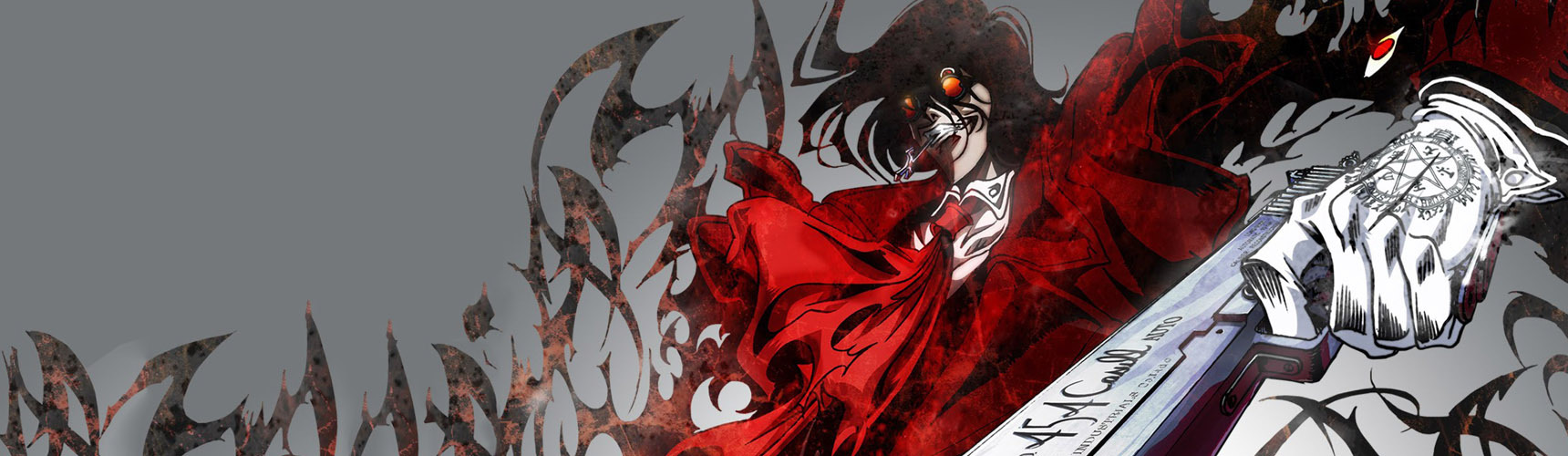
What makes Hellsing Ultimate’s atmosphere singular isn’t its vampires or its gore—it’s the gravitas of moral erosion. It doesn’t ask whether monsters exist; it forces you to watch institutions become them. Integra commands soldiers who fire silver rounds into children turned feral by vampiric infection—not with hesitation, but with duty. Alucard doesn’t revel in slaughter; he administers it like theology. Every explosion, every severed limb, every whispered Latin incantation over a battlefield soaked in black blood feels like a liturgy performed in a cathedral built from artillery shells. You don’t feel adrenaline—you feel responsibility, cold and unblinking. It’s seinen not because of age ratings, but because it refuses to flinch from the cost of holding the line: the line between protector and predator, believer and blasphemer, human and something that remembers being human.
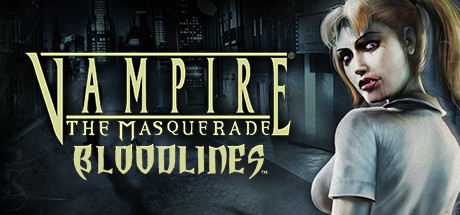
That same emotional DNA pulses in Vampire: The Masquerade – Bloodlines, where the description confirms it’s “a new type of RPG experience—one that blends all the core elements of a traditional RPG with the graphical richness, immediacy and brutal combat of a first-person action game.” Player reviews stress the necessity of patches just to access its full tone—mirroring how Hellsing Ultimate demands you sit with discomfort, not skip past it. Its “Body Horror & Occult” dimension isn’t aesthetic; it’s ontological. When your character’s own body betrays them—veins blackening, reflection fading, hunger overriding ethics—it echoes Alucard’s cursed immortality and Seras’s agonizing transformation. Both force you to inhabit corruption from the inside, not as spectacle, but as slow, inevitable redefinition.
Then there’s Dark Messiah of Might & Magic, described as delivering “ferocious combat in a dark and immersive world,” with a player review calling it “a fantastic melee combat game that still holds up pretty well today.” Its “Body Horror & Occult” and “Adult & Dark Seinen” dimensions land with physical precision: every dismemberment is heavy, every spell feels like tearing reality at the seams. Like Hellsing Ultimate, it treats violence as ritual—not cathartic, but consequential. When you slam a cultist’s skull into a stained-glass window depicting Saint George, the crunch isn’t sound design; it’s theology breaking. The game’s insistence on “ferocious combat” mirrors Alucard’s battles—not as duels, but as exorcisms performed with excessive force, where victory tastes like ash and sacramental wine.
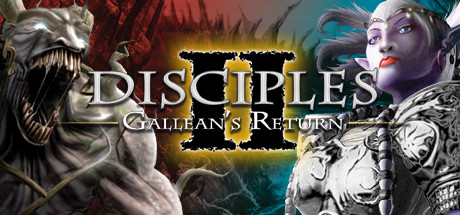
Even Disciples II: Gallean’s Return, though turn-based, resonates through its “Tactical Warfare” and “Dark Fantasy” dimensions. Its description names it a “compilation edition” housing expansions about light, shadow, and prophecy—echoing Hellsing Ultimate’s layered ideological warfare: Is the Vatican’s Iscariot truly holy? Is Millennium’s Nazi science any less righteous than Hellsing’s imperial mandate? Player reviews praise its “awesome atmosphere”—not for prettiness, but for density: fog-choked battlefields, crumbling cathedrals repurposed as command centers, units whose very stats reflect fallen grace. Like Integra reviewing casualty reports while sipping tea, Disciples II makes strategy feel burdened, not abstract.
Who lives for this? Not fans of “cool powers” or “epic showdowns.” It’s the reader who underlines passages in Heart of Darkness and pauses mid-battle in a game to stare at a ruined church spire piercing smoke. It’s the person who watches Alucard kneel before Integra—not in submission, but in recognition of covenant—and feels their throat tighten. It’s those who understand that the most terrifying horror isn’t fangs or fire, but the quiet certainty in a general’s voice as she orders the bombing of a city to save it, or the way a vampire’s laugh sounds exactly like a prayer gone sour. They don’t want escape. They want witness. And in Hellsing Ultimate, in Vampire: The Masquerade – Bloodlines, in Dark Messiah, in Disciples II, they find comrades—not in arms, but in unblinking eyes.
🎮29 Games That Match the Vibe





Match Dimensions Explained
❓Frequently Asked Questions
Why does Vampire: The Masquerade - Bloodlines feel like the closest thing to Hellsing Ultimate's tone?
Because it nails that same Adult & Dark Seinen vibe—Alucard’s sadistic charisma and brutal monologues echo directly in characters like Jeanette and Smiling Jack, especially during the Santa Monica bloodbath or the asylum body horror sequences. The game’s morally grey choices, occult lore depth, and unflinching violence (like the gory ‘Gang War’ mission where you rip throats out mid-conversation) mirror Hellsing’s blend of gothic grandeur and visceral chaos.
Is there a video game adaptation of Hellsing Ultimate itself?
No—there’s never been an official Hellsing Ultimate game. The only licensed title was the 2004 *Hellsing* PS2 game (based on the original anime, not Ultimate), and it’s long out of print with no remaster or re-release. So if you’re craving that exact Alucard vs. Millennium showdown, you’ll need to lean into tonally aligned games like *Dark Messiah of Might & Magic*, where you play as a corrupted antihero wielding vampiric powers and decapitating enemies with physics-driven melee—very much in the spirit of Episode 9’s cathedral massacre.
How does Assassin's Creed: Director's Cut Edition compare to Dark Messiah of Might & Magic for Hellsing-style action?
Assassin’s Creed is more about stealthy, parkour-fueled assassination across a sun-bleached, historically grounded world—think Alucard’s precision but without the gore or supernatural flair. *Dark Messiah*, on the other hand, delivers exactly what Hellsing fans want: over-the-top melee combos, dismemberment, vampiric abilities (like blood magic and summoning bats), and a dark, oppressive atmosphere—closer to the London sewers battle than anything in Jerusalem’s markets.
What’s the best game like Hellsing Ultimate if I want that ‘gothic dread + unstoppable power fantasy’ vibe?
Go straight to *Dark Messiah of Might & Magic*—it’s built for that exact feeling: you start as a half-vampire antihero who gains increasingly monstrous powers (like turning enemies into blood geysers or summoning skeletal minions), all while stalking candlelit crypts and collapsing cathedrals. The combat system rewards aggression and spectacle, just like Alucard’s ‘I am a monster’ moments—and unlike *Disciples II* or *Heretic*, it puts *you* in the boots of the unstoppable force, not a commander or distant mage.