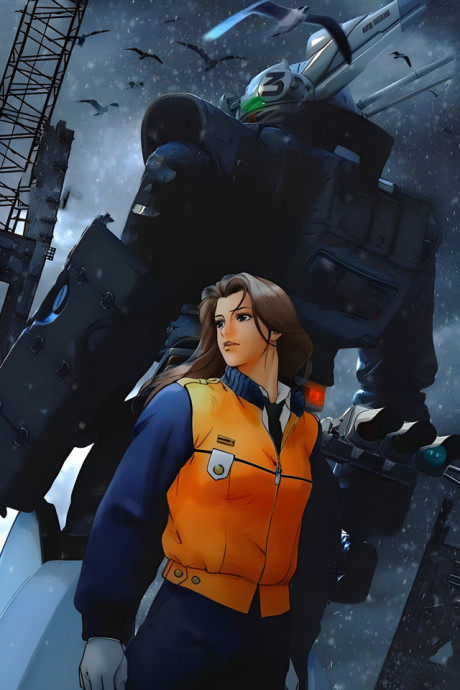
Mobile Police Patlabor 2: The Movie
The date is 2002, three years after the events of PATLABOR 1 – Mobile Police. The destruction of a United Nations Labor team in South East Asia begins the build-up to a deadly terrorist plan that threatens to send shockwaves throughout Japan's military. With evidence of an impending military takeover, the scattered members of the original SVD (Special Vehicle Division) must gather to defend the city against danger. To make matters worse, the mastermind behind the operation is none other than Nagumo's former teacher and ex-lover Tsuge.
(Source: Anime News Network)
📺Anime Details
📝Editorial Analysis
Rain slicks the asphalt of Tokyo’s Yoyogi Park at 3:47 a.m. A single patrol car idles, its headlights cutting twin tunnels through fog so thick it muffles even the hum of distant LABORs. Inside, Chief Koga doesn’t speak. He stares at a grainy satellite feed — not of an enemy, but of a military briefing room in Yokota Air Base, where officers in crisp uniforms review deployment orders stamped “Operation Silent Dawn.” Their faces are calm. Their hands don’t tremble. That’s what chills you: the absolute banality of the coup.

That stillness — not silence, but suppressed velocity — is Mobile Police Patlabor 2: The Movie’s heartbeat. It’s not about explosions or mecha duels (though one devastating LABOR ambush in the National Diet building lands like a physical blow). It’s about the weight of paperwork, the lag between intelligence and action, the way a single decrypted fax — “UN Labor team neutralized in Cambodia” — unravels three years of fragile civilian oversight. You feel the dread of competence: villains who don’t rant, but cite budget allocations; heroes who don’t charge, but cross-check radio frequencies and lobby for jurisdictional authority. It makes you think — not about good vs. evil, but about how easily legitimacy becomes leverage, how bureaucracy can be weaponized with surgical precision, and why the most terrifying threat isn’t chaos, but order imposed without consent.
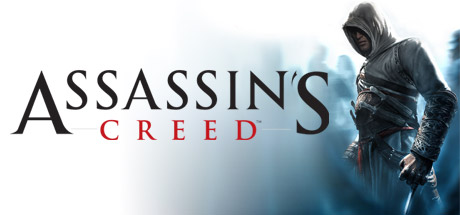
Assassin's Creed™: Director's Cut Edition shares that same neon-noir tension — not in its parkour, but in its political architecture. Its description calls it a “Political Thriller, Neon Noir, Tactical Warfare” — and the player review admits the models are dated, yet no issues with me. That’s the key: you forgive the surface because the substructure grips you — the way Altaïr moves through Jerusalem not as a warrior, but as an intelligence asset navigating layered allegiances, decoding messages hidden in merchant ledgers, watching Templar commanders debate resource allocation in hushed, candlelit rooms. Like Patlabor 2’s SVD, he operates in the interstitial spaces — not frontlines, but logistics, protocol, and perception. Both make power feel administrative, not theatrical.
Disco Elysium - The Final Cut resonates in its philosophical exhaustion. Its description positions you as a detective with “a unique skill system” and “a whole city to carve your path across.” The player review drops that line — “Capital has the ability to subsume all critiques into itself. Even those who would critique capital end up reinforcing it instead.” — and it lands like Koga staring at his own department’s internal memo authorizing surveillance on civilian journalists. Patlabor 2’s villains don’t hijack tanks; they exploit legal loopholes in the Self-Defense Forces’ emergency protocols. Disco Elysium’s systems force you to confront how every skill check — Logic, Empathy, Electrochemistry — is already embedded in a broken civic machine. Neither offers catharsis. They offer recognition: the slow, sickening realization that the system isn’t malfunctioning — it’s working exactly as designed.
Deus Ex: Game of the Year Edition mirrors Patlabor 2’s techno-paranoia, not through cyborgs, but through its foundational dread: “an ages old conspiracy bent on world domination.” Its player review praises how the game gives you all options with one hit of the esc key — a perfect echo of Patlabor 2’s central dilemma. When the SVD intercepts the rogue LABOR unit near Shinjuku Station, they don’t have one solution. They have three: disable comms (tech), negotiate via hostage channel (diplomacy), or authorize live-fire (military). Each choice fractures trust, rewrites jurisdiction, and exposes another layer of the conspiracy. Deus Ex doesn’t hand you a gun first — it hands you an interface, a menu of systemic levers. So does Patlabor 2: every decision is made in a war room lit by flickering monitors, every victory measured in revised SOPs, not body counts.
This isn’t for the viewer who wants cathartic mecha battles or the player chasing power fantasies. It’s for the person who feels a prickle of unease when a politician says “for national security,” who reads a news headline and immediately traces the chain of funding, authority, and plausible deniability behind it. It’s for the one who finds more tension in a paused security feed than in a missile launch — who understands that real stakes aren’t life or death, but what kind of world gets built in the quiet hours between crisis and cover-up. They’ll recognize themselves in Koga’s tired eyes, in Harry’s fragmented monologues, in the hum of a server rack housing evidence no one’s authorized to open. That’s the shared pulse: quiet, precise, and utterly relentless.
🎮34 Games That Match the Vibe








Match Dimensions Explained
❓Frequently Asked Questions
Why does Assassin's Creed: Director's Cut Edition feel so much like Patlabor 2’s political thriller vibe?
Because both hinge on real-world geopolitical tension masked by procedural bureaucracy—like Patlabor 2’s Tokyo Metro Police navigating UN mandates and shadowy defense contractors, Assassin’s Creed drops you into Saladin’s court amid Templar conspiracies and factional betrayals. The game’s ‘Tactical Warfare’ and ‘Political Thriller’ dimensions directly mirror the film’s slow-burn dread and moral ambiguity—not just action, but *consequence*, like when Altaïr debates ideology with Al Mualim just as Goto debates sovereignty with the UN in that tense conference room scene.
Is there a Patlabor 2 game adaptation for PC or console?
No—there’s never been an official Patlabor 2 game adaptation. The closest are spiritual matches like Act of War: Direct Action, which mirrors the film’s near-future military realism: think JSDF-style joint ops, drone surveillance cutscenes, and a campaign driven by oil politics and false-flag terrorism—very much like Patlabor 2’s Oizumi Bridge standoff and the phantom ‘terrorist’ narrative engineered by insiders.
How does Disco Elysium compare to Deus Ex: Game of the Year Edition for Patlabor 2 fans who love cerebral political noir?
Disco Elysium nails the *mood*—rain-slicked streets, existential dialogue trees, and systemic critique (like your Skill checks literally debating capital’s self-cannibalism)—but Deus Ex gives you the *mechanics*: hacking security systems like Patlabor’s Labors, choosing stealth vs. force during corporate black-ops raids, and that iconic 2052 dystopia where every NPC has ideological weight—just like Chief Goto weighing loyalty against constitutional duty in the film’s final monologue.
What’s the best game like Patlabor 2 if I want that slow-burn, rain-soaked, morally exhausted vibe?
Disco Elysium – The Final Cut is your answer. It’s dripping with Neon Noir: think the same oppressive gray skies, flickering neon signs over decaying city blocks, and characters worn thin by institutional rot—like Kim Kitsuragi’s weary pragmatism echoing Goto’s quiet resignation. Even the skill-check system feels like Patlabor 2’s layered decision-making: every conversation forces you to confront ideology, memory, and consequence—not just ‘win’ or ‘lose’, but *what kind of world you’re complicit in building*.