
Cat Soup
Cat Soup is an extremely difficult film to describe, due to its awesome surrealism and almost nonexistant dialogue. It is more a work of art than an anime. There are many underlying themes, such as the transcience of man's existence, but it can be enjoyed without understanding any of them. The plot, though simple, isn't necessarily understandable without being explained. The main character, a cat named Nyatto, embarks upon a journey to save his sister's soul, which was ripped in two when Nyatto tried to save her from Death. She trails after him, brain-dead. They encounter many brilliant, mind-bending situations, beginning with a disturbing magic show.
(Source: Anime News Network)
📺Anime Details
📝Editorial Analysis
A cat’s paw, trembling, presses against a cracked mirror—and the reflection isn’t its own. It’s a hollow-eyed sister, mouth sewn shut with black thread, one half of her face dissolving into static. No sound. Just the wet shlick of something unseen pulling at the edges of reality. That’s the heartbeat of Cat Soup: not plot, not character arc, but presence—a raw, wordless tremor in the membrane between life and afterlife, body and void.
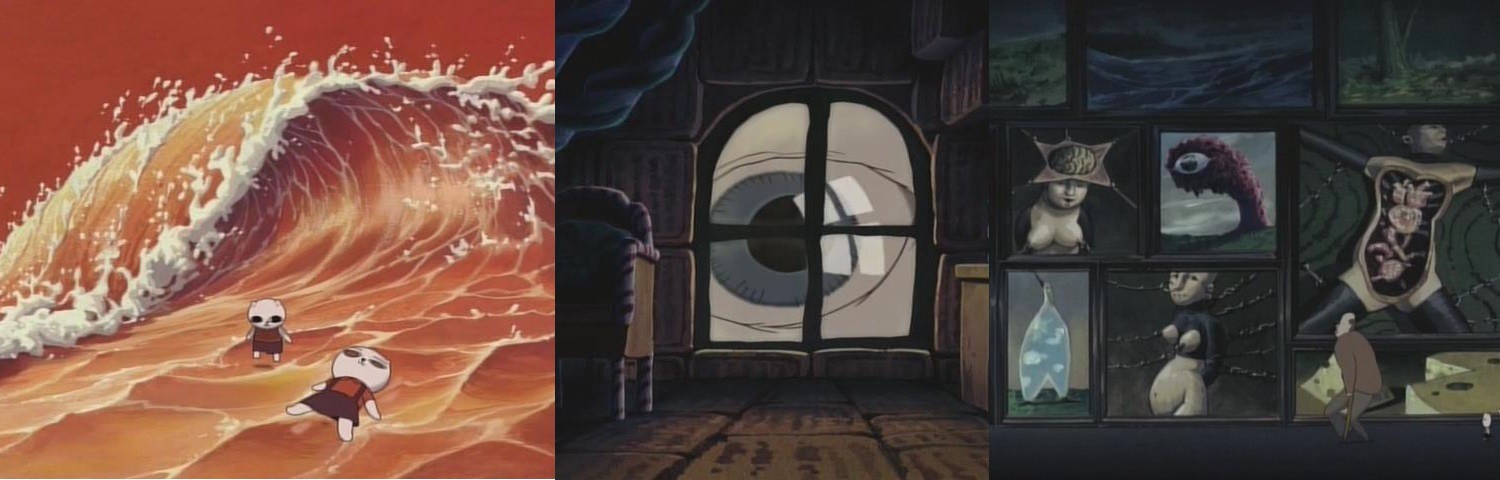
What makes Cat Soup ache like this isn’t its surrealism as spectacle—it’s how it refuses comfort. There’s no exposition to cushion the horror of a train slicing cleanly through a cat’s torso while he keeps walking, tail still twitching. No music to soothe the image of a godlike fetus floating in a cosmic womb, indifferent as Nyatto scrambles across its placental surface. It’s philosophical dread made tactile: the fragility of identity, the absurdity of survival when even time bleeds and re-knots itself. You don’t watch it—you endure its logic, which feels less like narrative and more like fever-dream archaeology: digging up half-remembered myths about souls, thresholds, and the quiet violence of existence itself. It doesn’t ask you to understand. It asks you to feel the weight of a soul split down the middle—and keep moving anyway.
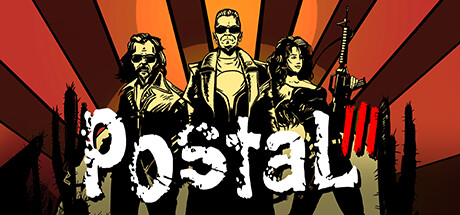
That same unmoored gravity pulses through Postal III, where the protagonist stumbles through a grotesque, sun-blasted parody of Eastern Europe—not as satire alone, but as psychic debris. The description calls it “Good or Insane? The choice is yours,” and that dissonance mirrors Cat Soup’s refusal to assign moral or narrative scaffolding to chaos. Like Nyatto navigating a railway station that folds into a cathedral then into a meat locker, the Postal Dude drags his pitbull Champ past roadside shrines to consumerism and decaying Orthodox icons—no explanation, just accumulation of wrongness. A player review admits, “It's postal, so everything is weird”—not as dismissal, but as surrender to the same rule-less ontology that governs Cat Soup: if reality is already fraying, why pretend it holds?
Then there’s S.T.A.L.K.E.R.: Shadow of Chernobyl, where the Zone isn’t just dangerous—it’s alive in ways that reject comprehension. Radiation doesn’t just burn; it warps perception. Anomalies don’t obey physics—they breathe. The description nails it: “you fear not only the radiation, anomalies and deadly creatures, but other S.T.A.L.K.E.R.s”—because threat here isn’t external, it’s ambient, osmotic. Like Cat Soup’s afterlife, the Zone has no map, only echoes: whispers in static, mutated deer with too many eyes, artifacts humming with unstable metaphysics. A player review says “The map is big and beautiful…”, but that beauty is uncanny, sacred and rotting—exactly how Cat Soup renders a field of giant dandelions: serene until their seeds open into screaming mouths. Both refuse catharsis. Survival isn’t triumph—it’s temporary reprieve inside a system that doesn’t care if you’re whole.
And RAGE, though its review calls it “nothing spectacular”, shares something quieter but deeper: its world is post-ontological. The description boasts “jaw-dropping graphics!”—but what lingers isn’t spectacle, it’s the texture of collapse: ruined highways swallowed by desert, biomechanical mutants crawling from fissures, cities rebuilt atop graves. Like Cat Soup’s urban decay—subways flooded with ink-black water, billboards showing smiling cats whose eyes blink out one by one—RAGE treats environment as memory made hostile. No lore dump explains why the world ended. You just wake up inside the wound, same as Nyatto does, paws sticky with something unnameable.
These aren’t matches for fans of “weird.” They’re resonances for people who’ve ever stared at a crack in the sidewalk and felt the ground tilt—not because it’s scary, but because it’s true: that meaning is provisional, bodies are temporary vessels, and the universe hums with rhythms older than language. You’ll love these pairings if you’ve cried during a silent scene of a cat dragging its own spine across gravel—not because it’s tragic, but because it’s honest. If you replay a game not for victory, but to stand again in that rain-soaked Zone checkpoint, listening to the wind carry voices that might be ghosts or static or your own pulse echoing back. If you don’t need a reason to keep going—just the stubborn, flickering insistence of a paw on glass, pressing, pressing, pressing—even when the reflection won’t look back.
🎮42 Games That Match the Vibe






Match Dimensions Explained
❓Frequently Asked Questions
Why is Postal III listed as similar to Cat Soup when they seem totally different?
Great question—it’s the shared 'Adult & Dark Seinen' + 'Body Horror & Occult' vibe that links them, not tone or genre. Like Cat Soup’s surreal dismemberment and liminal decay, Postal III leans into grotesque, absurdist body horror (think Champ the pitbull vomiting radioactive sludge or the Dude’s increasingly fragmented psyche), all wrapped in a nihilistic, non-linear narrative—no heroic arcs, just raw, uncomfortable escalation.
Is there a Cat Soup anime adaptation I can watch instead of playing games like it?
No official anime adaptation exists—but that’s why games like S.T.A.L.K.E.R.: Shadow of Chernobyl hit so close: its Zone feels like Cat Soup’s world made interactive—radiation-scarred landscapes, mutated creatures with warped anatomy (like the Flesh or Controllers), and that same eerie, wordless dread as you wander abandoned labs and fog-choked forests, never quite sure what’s watching from the anomalies’ edges.
How does Rise of the Argonauts compare to Cat Soup in terms of surrealism and mood?
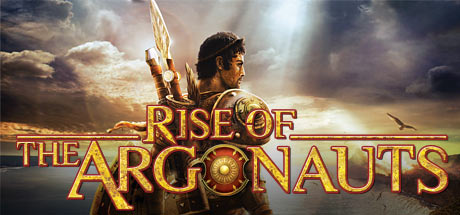
It doesn’t—at all. Rise of the Argonauts is grounded mythic tragedy (Jason mourning Medea, battling centaurs with bronze swords), while Cat Soup is pure nonlinear dream-logic. They only share 'Mythology & Folklore' + 'Adult & Dark Seinen' on paper; think of it like comparing *The Odyssey* to a David Lynch short film—they’re both 'mythic', but one builds catharsis through heroism, the other dissolves meaning through fragmented, haunting imagery.
What’s the best game like Cat Soup if I want that quiet, unsettling, liminal-space feeling?
S.T.A.L.K.E.R.: Shadow of Chernobyl—hands down. Wander the deserted Pripyat streets at dusk, hear distant radio static crackle over ruined apartments, watch shadows warp unnaturally near anomaly fields, and feel the weight of silence broken only by your own breathing and the skitter of mutated rats. It’s not jump-scares—it’s the same slow-burn, atmospheric unease as Cat Soup’s empty train stations and floating islands of memory.