
Attack on Titan Season 3 Part 2
The battle to retake Wall Maria begins now! With Eren’s new hardening ability, the Scouts are confident they can seal the wall and take back Shiganshina District. If they succeed, Eren can finally unlock the secrets of the basement—and the world. But danger lies in wait as Reiner, Bertholdt, and the Beast Titan have plans of their own. Could this be humanity’s final battle for survival?
(Source: Funimation)
📺Anime Details
📝Editorial Analysis
The basement door creaks open—not with a bang, but with the slow, dry groan of rusted iron and decades of silence collapsing inward. Dust hangs suspended in the single shaft of light cutting through the broken ceiling. Eren’s breath hitches. Not from fear, not from triumph—but from the weight of memory that hasn’t been lived yet, only inherited. That moment isn’t about answers. It’s about standing at the threshold of a truth so vast it hollows out your sense of self. You don’t feel hope. You feel vertigo.

That’s the atmosphere of Attack on Titan Season 3 Part 2: a suffocating, claustrophobic pressure where every tactical decision is laced with moral erosion, every battlefield is also a courtroom, and every victory tastes like ash. It’s not dystopia as backdrop—it’s dystopia as physiology. The walls aren’t just stone; they’re inherited lies made manifest. The military isn’t just an institution; it’s a recursive loop of command, concealment, and sanctioned betrayal. Even the superpowers—hardening, shapeshifting, memory manipulation—feel less like spectacle and more like symptoms: bodies betraying their own histories, minds rewriting themselves to survive the unbearable. You don’t watch this season. You endure it—heart pounding not just from action, but from the dread of what confirmation will cost.
Which is why Assassin's Creed™: Director's Cut Edition lands with such eerie resonance. Its description calls it a “Political Thriller” nested inside “Tactical Warfare”—exactly the texture of the Scouts’ siege on Shiganshina, where flanking maneuvers double as ideological ambushes and every intel briefing hides a buried decree from the King. The player review admits the models are dated—but that grit, that slightly stiff animation, mirrors the anime’s deliberate pacing: nothing feels slick or effortless. Every climb, every assassination, every whispered conspiracy feels laborious, like history itself refusing to be streamlined. You’re not mastering a system—you’re navigating a web you didn’t weave, just like Eren stepping into the basement’s silence.
Then there’s Prince of Persia: Warrior Within™, whose description names “Time & Memory” as core dimensions—and oh, how that echoes. Bertholdt’s collapse under the weight of his own past, Reiner’s fractured monologues echoing across years, Eren’s rage looping back on itself like a curse… this season treats time not as linearity but as trauma architecture. The player review nails it: “Dahaka chase is still as goated as it was before.” That relentless, inevitable pursuit? That’s the Beast Titan’s roar echoing across the ruins—not just a threat, but the sound of consequence finally catching up. The game’s dark fantasy isn’t ornamental; it’s psychological weather. So is the anime’s.
And BioShock Infinite, with its “Time & Memory” and “Cyberpunk & Dystopia” dimensions, hits even deeper. Its description frames Booker’s mission as debt repayment—a life traded for erasure—mirroring Eren’s entire arc: his body, his freedom, his future, all mortgaged against a single truth. The player review mentions “criticisms are valid as a matter of opinion, but after…” — that trailing ellipsis? That’s the feeling of watching the Survey Corps march toward Shiganshina knowing some of them won’t return, some truths will break them, and some choices have already been made for them by ghosts in the basement. The dystopia here isn’t collapsed buildings—it’s the architecture of belief itself, cracked wide open.
This pairing isn’t for fans of clean resolutions or power fantasies. It’s for the ones who replay scenes just to catch the tremor in a character’s voice before they lie. For players who pause mid-chase to stare at crumbling murals in Assassin’s Creed, wondering who erased the names. For those who keep Prince of Persia’s Dahaka audio on loop—not for adrenaline, but because its growl sounds like the sound of inevitability made flesh. It’s for people who don’t want to win the war. They want to understand why the war was never theirs to win in the first place. And when the basement door closes behind them—quietly, finally—they don’t walk away lighter. They walk away changed, carrying the weight like a second spine.
🎮39 Games That Match the Vibe



Match Dimensions Explained
❓Frequently Asked Questions
Why does Assassin's Creed feel like Attack on Titan Season 3 Part 2’s political intrigue and covert warfare?
Because both hinge on tense, morally gray power struggles—like Erwin’s brutal coup in the Military Police or the Survey Corps’ underground maneuvering—and Assassin's Creed mirrors that with its Templar-Order conspiracy, rooftop espionage in Jerusalem, and tactical stealth takedowns. The game’s ‘Political Thriller’ and ‘Tactical Warfare’ dimensions directly echo the season’s focus on institutional betrayal and calculated risk, not just flashy combat.
Is there a game adaptation of Attack on Titan Season 3 Part 2?
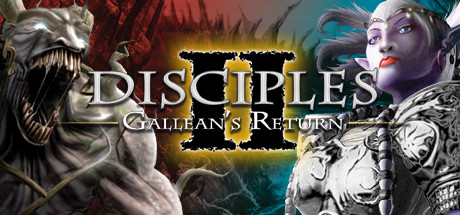
No—there’s no official game adaptation of Season 3 Part 2 specifically. The only licensed AoT games (like *Attack on Titan* and *Attack on Titan 2*) cover up to Season 2 or loosely adapt manga arcs, but none replicate the Rod Reiss basement confrontation, the Royal Government coup, or the emotional weight of Erwin’s final charge. Fans turn to tonally aligned games like *Disciples II: Gallean's Return*, whose ‘Dark Fantasy’ + ‘Tactical Warfare’ vibe captures that grim, strategy-heavy gravity.
How does Prince of Persia: Warrior Within compare to Sacred Gold for AoT S3P2’s action intensity?
Warrior Within wins on raw, desperate momentum—think Mikasa’s berserker hallway fight or Levi’s vertical maneuvering—thanks to its relentless Dahaka chase sequences, fluid parkour-combat blend, and oppressive atmosphere. Sacred Gold, while also ‘Dark Fantasy’ + ‘Action Spectacle’, leans into janky, squad-based monster brawling (orcs, ogres) without that same visceral, high-stakes choreography or emotional urgency.
What’s the best game like Attack on Titan Season 3 Part 2 if I want that heavy, tragic, morally exhausted vibe?
Go with *Disciples II: Gallean's Return*—its ‘Dark Fantasy’ + ‘JRPG Narrative’ + ‘Tactical Warfare’ combo nails the season’s tone: slow-burn dread, impossible choices (like choosing who lives during a siege), and world-weary heroes fighting a corrupt, ancient evil. Player reviews even call out its ‘awesome atmosphere’—exactly the kind of somber, consequential weight you get from Erwin’s last stand or Hange’s grief-stricken resolve.