
Sarazanmai
The stage is Asakusa. One day, three 2nd-year middle school students — Kazuki Yasaka, Tooi Kuji, and Enta Jinnai — meet a mysterious kappa-like creature named Keppi, who forcibly takes their shirikodama (a mythical organ kappa steal through a person's anus) and transforms the boys into kappa.
Keppi informs them, "If you wish to return to your former selves, you must connect in 'that way' and bring me the shirikodama of zombies." Will the three boys be able to connect as they steal shirikodama from zombies?! Meanwhile, two policemen — Reo Niiboshi and Mabu Akutsu — are up to something at the police box where they are stationed.
(Source: Official Website)
📺Anime Details
📝Editorial Analysis
The smell of wet concrete and fried dough hangs thick in the Asakusa alleyway as Kazuki, Tooi, and Enta—still reeling from Keppi’s violation—stumble backward, their human bodies dissolving into slick, greenish kappa forms. Their tails slap the pavement. Their eyes widen—not with terror alone, but with shame, confusion, and something quieter: the dawning horror that their deepest secrets are about to be ripped out—not just by Keppi, but by each other. That moment isn’t fantasy escapism. It’s the gut-punch intimacy of being seen before you’re ready, in a world where desire, trauma, and transformation leak out of every sewer grate and convenience store light.
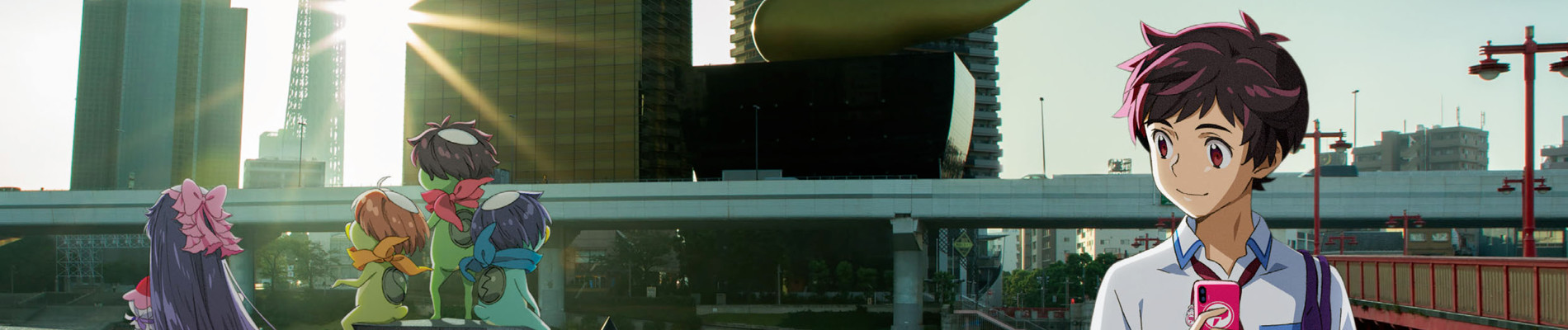
Sarazanmai doesn’t build its world with exposition or lore dumps. It builds it with discomfort—the squirm of a middle-schooler caught lying, the heat behind averted eyes, the way laughter cracks when someone says something too true. Its surreal comedy isn’t absurdist for shock; it’s surgical. The shirikodama—a mythical organ pulled through the anus—isn’t grotesque for shock value. It’s a visceral metaphor for how shame, longing, and vulnerability are physically lodged in the body, hidden but inescapable. Every time the boys fuse into a single kappa body to fight a zombie, their limbs tangle, their voices overlap, their private truths spill out mid-transformation—not as confession, but as leakage. This is urban fantasy not as backdrop, but as pressure cooker: Tokyo’s neon reflects off puddles that swallow secrets whole, and every Youkai is just a distorted mirror of what the boys refuse to name aloud.
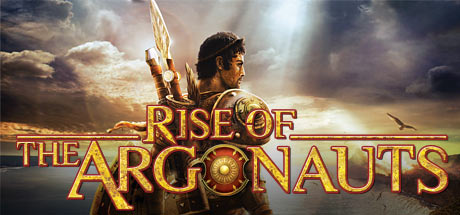
That emotional DNA—raw, unfiltered, bodily—echoes in games that treat myth not as spectacle, but as psychological scaffolding. Rise of the Argonauts, for instance, opens with Jason watching his fiancée die on their wedding day—then vows to resurrect her at any cost. The description calls it “a vow to do anything to restore her life.” That same desperate, self-annihilating bargain pulses through Sarazanmai: the boys don’t want power or glory—they want reversion, safety, control over their own insides. Player reviews note its grounding in “ancient history,” but what resonates deeper is the weight of grief that bends myth into personal tragedy—not epic scale, but intimate rupture.
Then there’s Jade Empire™: Special Edition, whose description invites players to “follow the path of the open palm or the closed fist,” framing morality as embodied choice—not abstract principle, but stance, touch, resistance. A player review praises its “Emotional Narrative” and “Romance & Shoujo” dimensions—not as decoration, but as structural pillars. Like Sarazanmai, it treats relationships as kinetic forces: love isn’t dialogue—it’s sparring partners circling, hands nearly brushing, philosophy clashing in real time. Both works understand that connection is physical labor, whether you’re deflecting a sword strike or holding eye contact while your secret threatens to burst out of your throat.
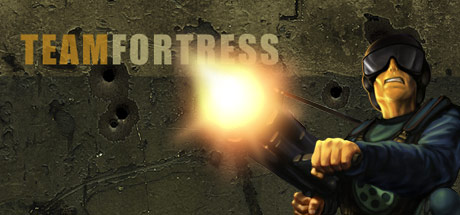
Even Team Fortress Classic, buried under nostalgia and “Action Spectacle,” carries a flicker of this truth. Its description highlights “over nine character classes—Medic to Spy to Demolition Man—enlisted in a unique style of online team combat.” But the player review cuts deeper: “simply the best nostalgic game, i have dreams about this game.” Not because of maps or weapons—but because of role, repetition, ritual. In Sarazanmai, the boys don’t just fight zombies—they perform the same clumsy, urgent, half-laughing fusion again and again, until the act itself becomes a language. TF2’s classes aren’t archetypes; they’re social contracts, roles you inhabit so deeply they reshape how you move, speak, betray, heal. That shared, almost sacred repetition—where identity is forged in repeated, bodily action—is where these two collide.
This isn’t about liking “mythology” or “comedy.” It’s for the person who cries during a boss fight because the music swells exactly as their character finally says the thing they’ve been swallowing for ten hours. It’s for the viewer who watches Enta’s trembling hands after a confession and feels their own pulse jump—not because it’s romantic, but because it’s true: that moment when your body betrays your heart before your mouth catches up. It’s for anyone who’s ever felt like their emotions were a shirikodama—precious, dangerous, and impossible to keep buried. They’ll recognize themselves in the damp alleyways, the cracked screen of a dying console, the echo of a voice saying, “Connect in ‘that way’”—not as instruction, but as plea.
🎮40 Games That Match the Vibe
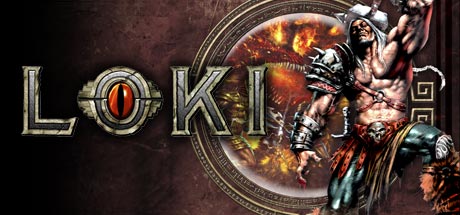







Match Dimensions Explained
❓Frequently Asked Questions
Why does Prince of Persia keep coming up in Sarazanmai comparisons?
Because both lean hard into surreal, body-horror-adjacent transformation sequences—like when the Prince gets infected by time-sand (echoing Sarazanmai’s eel possession scenes) and must navigate shifting, dreamlike architecture while wrestling with guilt and fractured identity. The comedy-parody dimension also aligns: Prince’s snarky narration and absurd set-pieces (e.g., dodging collapsing palaces while quipping) mirror Sarazanmai’s tonal whiplash between slapstick and emotional devastation.
Is there a Sarazanmai video game adaptation?
No—there’s no official Sarazanmai game, which is why fans turn to titles like Jade Empire™: Special Edition for its emotional narrative + romance & shoujo dimensions. Its branching relationship paths (like bonding with Mei or Dawn) and morally ambiguous choices echo Sarazanmai’s focus on intimacy-as-redemption, especially during quiet campfire dialogues where characters confess vulnerabilities—very much like Kazuki’s late-night talks with Toi.
How does Rise of the Argonauts compare to Loki for Sarazanmai fans?
Rise leans into adult & dark seinen grit—Jason’s grief-fueled quest, his fiancée’s violent death on their wedding day, and morally grey god-dealings hit Sarazanmai’s same tragic-mythic wavelength. Loki feels lighter and more mechanically shallow (per its 5/10 player review), with jarring glitches undermining its mythology & folklore depth—whereas Rise commits to somber worldbuilding, like confronting Hades in a blood-soaked Underworld chamber that visually recalls Sarazanmai’s drowned cityscapes.
What’s the best Sarazanmai-like game if I want chaotic, emotionally raw group banter?
Team Fortress Classic—it’s got that exact energy: nine wildly distinct, over-the-top classes (Medic’s manic German rants, Spy’s passive-aggressive taunts) bouncing off each other mid-battle, mirroring Sarazanmai’s trio constantly snapping, teasing, and revealing trauma mid-fight. Player reviews even call it ‘nostalgic’ and ‘dream-inducing,’ just like how Sarazanmai’s absurd humor (eel puns! koi pond chases!) masks deep loneliness—and TF2’s voice lines land with the same sudden, gut-punch sincerity.