
Hellsing
Hellsing follows the antiheroic vampire, Alucard, and a police girl-turned-vampire, Seras Victoria, two vampires employed by the vampire-extermination group of England, the Hellsing Organization. Slowly but surely, through their active duty, they find a new breed of vampires beginning to arise.
(Source: Anime News Network)
📺Anime Details
📝Editorial Analysis
Rain slicks the cobblestones of London like spilled ink. A single bullet cracks the silence—not from a gun, but from Alucard’s mouth, fired point-blank into a Nazi vampire’s skull. Blood doesn’t just spray; it unspools, thick and arterial, catching the sodium-yellow glow of a streetlamp before hitting the wet stone with a wet, final hiss. Seras Victoria stands frozen—not in fear, but in dawning horror at what she’s just witnessed, and what she’s becoming. That moment isn’t about power. It’s about weight: the weight of immortality worn like a lead coat, the weight of duty twisted into cruelty, the weight of a world where salvation wears fangs and carries a revolver full of souls.
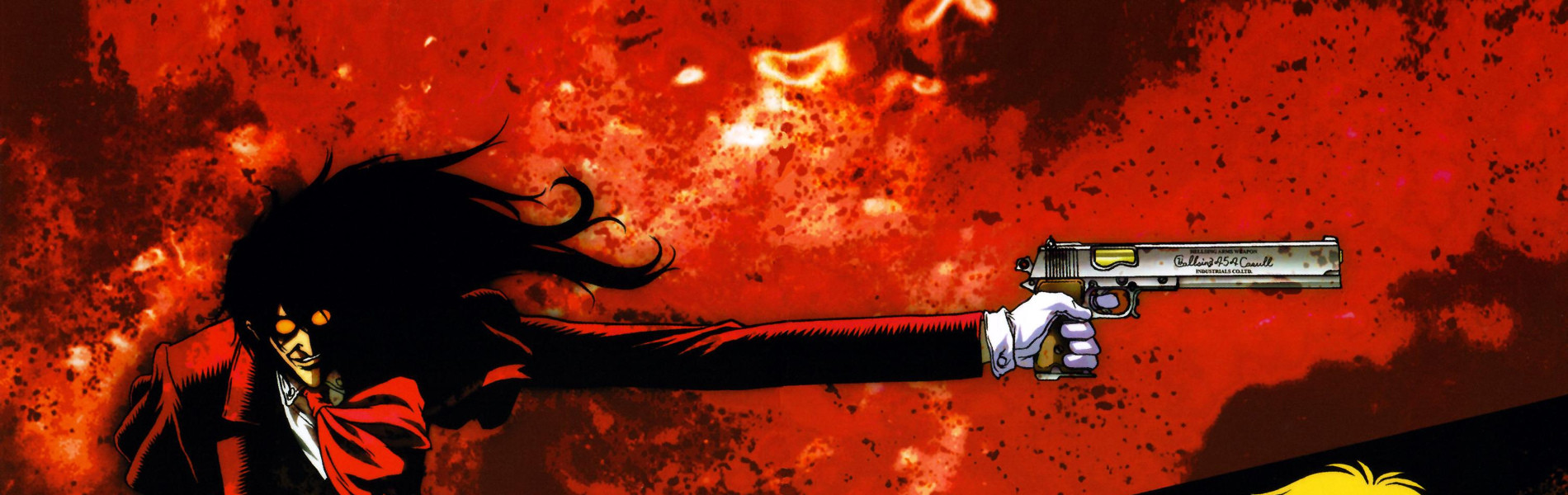
What makes Hellsing vibrate in your bones isn’t its gothic architecture or even its gore—it’s the moral exhaustion that seeps through every frame. This isn’t horror as jump-scare or monster-of-the-week. It’s horror as institutional decay: a centuries-old secret war fought in shadows by broken people who’ve long since stopped believing in clean victories. The noir isn’t just visual—it’s psychological. Every alleyway feels surveilled not by cameras, but by history. Every military briefing carries the echo of colonial violence repackaged as protocol. And Seras—this female protagonist thrust into vampirism not as fantasy, but as trauma—doesn’t ascend. She endures. You don’t feel exhilarated watching her fight. You feel resigned, alongside her, to the terrible arithmetic of survival: how much humanity must be shed to protect what little remains.
That same resonance hums in Vampire: The Masquerade – Bloodlines, where the description explicitly names Dark Fantasy, Neon Noir, and Adult & Dark Seinen—not as marketing tags, but as lived textures. Its world breathes the same air as Hellsing’s London: a city where every nightclub is a blood market, every bureaucrat a predator in a suit, and every moral choice frays the edges of your own soul. A player review nails it: “*BUY IT ON GOG; if you want to use the steam version you need to download the unofficial patch…”—that friction, that insistence on work to access the experience, mirrors Hellsing’s refusal to smooth over its roughness. You don’t glide through this world. You wade.
Then there’s Thief: Deadly Shadows, where you are Garrett—“Rarely seen and never caught”—a thief operating in the interstices of power, stealing not gold but secrets, moving through spaces where light itself feels like surveillance. The player review calls it “the best stealth game, rich atmosphere and the world feels alive…” That aliveness isn’t warmth—it’s tension, the sense that every shadow hides consequence, every guard’s patrol route maps onto a deeper, older rot. Like Seras learning to move unseen in Hellsing’s fog-choked streets, Garrett’s mastery isn’t freedom—it’s precision under pressure, a kind of exhausted grace in a world that rewards neither mercy nor honesty.
And Alice: Madness Returns, with its “grim reality of Victorian London” and “beautiful yet ghastly Wonderland”, shares Hellsing’s layered dissonance: the surface propriety of empire masking visceral, unprocessed pain. Alice doesn’t conquer her madness—she navigates it, weaponizing hallucination as both shield and scalpel. The player review’s frustrated, hands-on tone—“You have to edit the FPS cap manually in a config file…”—mirrors the anime’s aesthetic: nothing here is handed to you pristine. You engage with its brokenness, its glitches, its raw nerve-endings, because the feeling is worth the labor.
This pairing isn’t for fans of tidy lore dumps or heroic arcs. It’s for the ones who still remember the taste of copper when Alucard laughs, who pause mid-gameplay in Bloodlines to reread a journal entry about a vampire’s century-long grief, who hold their breath in Thief not because they’re about to be spotted—but because the silence itself feels alive with judgment. It’s for viewers and players who crave stories where power is a wound, loyalty is a gamble, and every victory smells faintly of ash. Not because they love darkness—but because they recognize, in its unflinching gaze, something terrifyingly true.
🎮38 Games That Match the Vibe












Match Dimensions Explained
❓Frequently Asked Questions
Why does Vampire: The Masquerade - Bloodlines feel so much like Hellsing despite not being about vampires fighting Nazis?
Because it nails that same gothic, morally gray intensity—like when you play as a fledgling Brujah in Santa Monica and get caught between the Camarilla’s cold bureaucracy and the anarchs’ brutal street wars. The neon-drenched alleys, the visceral melee takedowns (especially with the 'Frenzy' mechanic), and dialogue choices that spiral into bloody consequences all echo Hellsing’s tone—just swap Alucard for a jaded Ventrue elder and the Vatican for the Prince’s office.
Is there a Hellsing video game adaptation?
No official Hellsing game exists—but games like Vampire: The Masquerade - Bloodlines and Dark Messiah of Might & Magic hit that same dark fantasy + adult seinen sweet spot. Bloodlines even lets you play a monstrous, centuries-old vampire who manipulates humans and tears through enemies with supernatural savagery—very Alucard energy, just without the red coat or 'Hellsing Ultimate' branding.
How is Thief: Deadly Shadows different from Alice: Madness Returns if both are dark fantasy stealth-action games?
Thief leans hard into grounded, tactile stealth—think Garrett silently dropping from rafters, extinguishing torches, and eavesdropping on guards in rain-slicked, gaslit London—no magic, just atmosphere and tension. Alice, meanwhile, goes full psychological horror: you’re jumping between Victorian London and a twisted Wonderland where combat is surreal and violent (like slicing off a clockwork doll’s head mid-air), matching Hellsing’s tonal whiplash between grim reality and grotesque fantasy.
What’s the best game like Hellsing if I want that over-the-top, stylish, blood-soaked action vibe?
Dark Messiah of Might & Magic—it’s got the ferocious, physics-driven melee combat where you can kick enemies down stairs, impale them on chandeliers, or snap necks with brutal finishing moves. It’s set in a grimdark version of the Might & Magic universe, and fights feel as unrestrained and cathartic as Alucard’s rampages—plus, the unofficial patch fixes stability issues so you can actually enjoy that chaos without crashes.