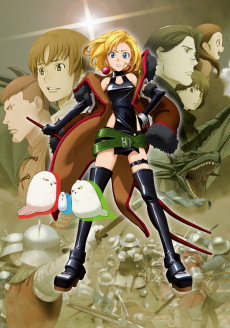
Maria the Virgin Witch
📺Anime Details
📝Editorial Analysis
The scent of rain on cobblestones, the low hum of a medieval chapel at dusk, and Maria’s bare feet pressing into damp earth as she whispers a prayer—not to saints, but to the wind, to the soil, to the quiet pulse of life she’s sworn to protect. Her magic doesn’t crackle with pyrotechnics; it breathes. A single dandelion seed lifts, trembles, then spirals upward—not as spectacle, but as covenant. That moment isn’t about power. It’s about tenderness in the face of war, about faith that refuses dogma but still kneels—not in submission, but in listening.
What makes Maria the Virgin Witch vibrate so uniquely isn’t its medieval setting or its witch protagonist—it’s how it holds sacredness and absurdity in the same hand. You laugh when Maria accidentally turns a bishop into a duck—then hold your breath when she stands between two armies, her body trembling not from fear, but from the unbearable weight of choosing which lives to shield. This isn’t dark fantasy that revels in despair; it’s soft gravity: a world where gods argue like siblings, dragons nap in sun-dappled meadows, and every spell carries the quiet exhaustion of compassion. It makes you feel fragile, yes—but also fervently held. It asks: What does devotion look like when it has no altar? What does peace cost when war is inevitable? Not answers—just the ache of asking, tenderly.
That emotional resonance echoes sharply in Rise of the Argonauts, where Jason’s grief isn’t abstract—it’s visceral, immediate: “a beautiful fiancé… killed on their wedding day”. His quest isn’t for glory, but for restoration—a word that pulses with the same yearning Maria channels into every healing charm. The player review nails it: “If you love games based on ancient history this one does it right…”—but what it does right isn’t accuracy. It’s honoring myth as living tissue: flawed, urgent, emotionally raw. Like Maria, Jason walks among gods who are capricious, petty, magnificent—and his humanity isn’t diminished by their presence; it’s clarified by it.
Then there’s Prince of Persia, returning “for the first time on next-generation platforms with an all-new epic journey”, built by the studio behind the Sands trilogy—yet deliberately separate. That separation matters. Like Maria’s rejection of rigid doctrine, this Prince steps outside inherited legend to forge something new—not rebellion for its own sake, but renewal. The dim “Healing & Slow Life” aligns perfectly: Maria’s magic slows time not for combat advantage, but to mend a child’s scraped knee, to coax wheat from barren soil. The game’s pacing, its emphasis on restoration over domination, mirrors her quiet insistence that care is action—not passive, not weak, but relentless.
And Assassin’s Creed™: Director’s Cut Edition, though dated in texture, merges “action” with “covenant”: its assassins don’t just kill—they uphold a code rooted in protecting the vulnerable, navigating systems of power that feel as Byzantine and morally slippery as the Vatican politics Maria navigates. The review admits flaws, yet affirms “no issues with me”—a testament to emotional fidelity over polish. Like Maria, the Assassin operates in gray zones where righteousness is measured not in absolutes, but in consequences: who lives because you chose mercy? Who dies because you chose silence?
These pairings aren’t for fans of “magic” or “mythology” as set dressing. They’re for people who feel hollow after a battle won without cost—and full after a small kindness that changes nothing, and everything. For readers who underline passages where a character touches dirt and feels the roots stir. For players who pause mid-combat to watch birds take flight from a ruined tower—not for atmosphere, but because life persists, stubborn and soft, even here. They’re for anyone who’s ever whispered a prayer into the wind—and meant it.
🎮50 Games That Match the Vibe









Match Dimensions Explained
❓Frequently Asked Questions
Why is Rise of the Argonauts recommended for fans of Maria the Virgin Witch?
Because both lean hard into mythic tragedy with morally gray adult stakes—Jason’s grief-fueled quest to resurrect his murdered fiancée mirrors Maria’s desperate, forbidden magic to protect her loved ones. The game’s Iolcus kingdom feels like a darker, bloodier cousin to Maria’s Edo-era Japan, and its combat-heavy pacing still leaves room for quiet, weighty character moments like Jason confronting Orpheus in the Underworld.
Is there a Black Myth: Wukong game adaptation of Maria the Virgin Witch?
No—Black Myth: Wukong is strictly based on *Journey to the West*, not Maria the Virgin Witch. But fans love the crossover appeal: both feature powerful, spiritually burdened protagonists (Wukong’s rebellion vs. Maria’s witchcraft), lavish mythological worldbuilding, and that same 'adult dark seinen' tone where divine power comes with brutal consequences—like Wukong’s shattered staff scene echoing Maria’s sacrificial rituals.
How does Prince of Persia (2024) compare to Maria the Virgin Witch in terms of mood and storytelling?
Prince of Persia (2024) shares Maria’s melancholic beauty and healing-through-sacrifice theme—the new Prince literally rewinds time to mend wounds, much like Maria’s spells that blur life/death boundaries—but it swaps Edo mysticism for Persian folklore and leans more into slow-burn intimacy (think the Prince and Elika’s quiet campfire talks) versus Maria’s tense, politically charged exorcisms and shrine confrontations.
What’s the best game like Maria the Virgin Witch if I want something atmospheric, emotionally heavy, and steeped in real-world mythology?
Rise of the Argonauts is your top pick—it’s got the grim, grounded mythology (Jason’s journey through actual Greek locales like Colchis), the adult emotional weight (his wedding-day trauma hits as hard as Maria’s isolation), and even similar visual texture: candlelit temples, crumbling oracle chambers, and boss fights against figures like Medea that feel spiritually resonant—not just flashy.