
PSYCHO-PASS: Sinners of the System 3 - On the Other Side of Love and Hate
Following the incident in the Southeast Asia Union (SEAUn) in 2116, Shinya Kogami resumes his vagrant journey. In a small South Asian nation, Kogami rescues a bus of refugees under attack by armed guerrilla forces. Among the refugees is a young lady by the name of Tenzing, who begs Kogami to teach her how to retaliate against the enemy. Just what do the girl who desires revenge and the man who has exacted revenge see as they gaze upon the edge of a world from which there is no escape?
(Source: Official Website, translated by Edo)
📺Anime Details
📝Editorial Analysis
The dust doesn’t settle—it hangs. Not like ash after an explosion, but like pollen in stagnant air: fine, persistent, clinging to Kogami’s coat as he stands motionless beside the wrecked bus, rifle lowered but not slung, watching Tenzing wipe blood from her temple with trembling fingers. Her eyes don’t glisten with tears. They’re dry, focused, already measuring the distance between her small hands and the guerrilla’s dropped sidearm. That silence—between gunfire and decision, between rescue and recruitment—is where PSYCHO-PASS: Sinners of the System 3 - On the Other Side of Love and Hate lives. Not in catharsis. Not in triumph. In the weight of a choice that can’t be unmade.

This isn’t cyberpunk as neon spectacle or dystopia as set dressing. It’s the exhaustion of moral calculus in a world where justice has been outsourced to algorithms—and then abandoned entirely. The rural South Asian setting isn’t backdrop; it’s texture: heat-haze distorting distant hills, the low thrum of a generator powering a single flickering bulb in a refugee tent, the way Kogami’s breath fogs slightly in the cool pre-dawn before another ambush. There’s no Sibyl System here—just consequence, raw and unmediated. What it makes you feel is vertigo: not from falling, but from realizing there’s no floor left to land on. You think about what revenge looks like when it’s not a climax, but a curriculum—and what kind of teacher a man like Kogami becomes when he stops running from his past and starts instructing in it.
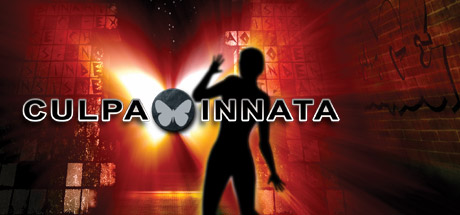
Culpa Innata resonates because it shares that same suffocating, bureaucratic dread beneath its “perfect society” veneer—the World Union’s prosperity-as-science mirroring Sibyl’s false utopia, both systems collapsing under the weight of their own logic. The player review calling it “every location, run, run, run” nails the emotional rhythm: it’s not frantic action, but relentless traversal through hollow institutions, just as Kogami moves through villages, checkpoints, and ruins—not chasing answers, but outpacing the echo of his own actions. That fatigue, that sense of being perpetually on the move without progress, is the shared pulse.
The Longest Journey, despite its parallel universes, hits the same nerve—not through scale, but through tone. Its player review says it’s “less a long journey than a long conversation… and somehow, the conversation is good enough that you keep reading to the end.” That’s precisely the anime’s quiet power: the extended silences between Kogami and Tenzing aren’t pauses—they’re interrogations. Every glance, every half-spoken sentence about “what comes after the shot,” carries the density of a philosophical treatise. Like April Ryan navigating dual realities, Kogami and Tenzing navigate dual moralities—one forged in systemic violence, the other in personal trauma—neither reducible to right or wrong, only inevitable.
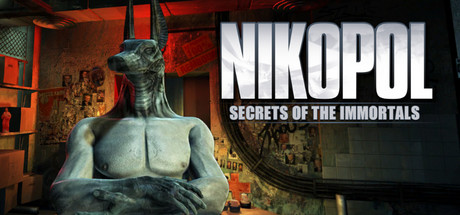
Nikopol: Secrets of the Immortals locks into the aesthetic and existential grit: 2023 France under a religious dictatorship, a pyramid ship hovering over Paris—its first-person perspective forces you into the protagonist’s disorientation, much like the anime’s tight framing on Kogami’s weathered face or Tenzing’s unwavering stare. The player review praises its “cyberpunk atmosphere” and how “animations and cutscenes enhance” the mood—not through flash, but through texture: the grain of film, the static hum of broken tech, the oppressive geometry of power structures. That’s the same feeling when Kogami cleans his rifle by firelight, the metal catching dull orange light—not as ritual, but as recalibration.
This pairing isn’t for fans of clean resolutions or heroic arcs. It’s for the ones who linger on the last frame of a scene long after the credits roll—who feel the ache in Kogami’s stillness, who recognize the quiet fury in Tenzing’s silence, who understand that some wounds don’t scar; they harden into compass points. It’s for players who replay dialogue trees not to optimize outcomes, but to hear the tremor in a voice one more time. For viewers who don’t want hope served neat—they want it unstable, unverifiable, held in both hands like a live round, knowing full well that pulling the trigger changes the shooter more than the target. That’s where these stories meet: not at the beginning or the end, but on the other side—of love, of hate, of escape—where all that remains is the next breath, the next step, the next impossible choice, made in dust that refuses to settle.
🎮47 Games That Match the Vibe






































Match Dimensions Explained
❓Frequently Asked Questions
Why is Culpa Innata listed as similar to PSYCHO-PASS: Sinners of the System 3 despite having zero anime cutscenes or Shinya Kogami?
It matches on the core dystopian tension and moral ambiguity — like the film’s ‘Sibyl System’ surveillance state, Culpa Innata’s World Union enforces 'perfect' social harmony through behavioral prediction and preemptive control. The game even mirrors that chilling scene where characters are judged not by actions but by latent psychological risk scores — though players complain it’s exhausting to run through every location just to uncover those truths.
Is there a PSYCHO-PASS visual novel or adventure game adaptation with branching choices like Sinners of the System 3’s courtroom climax?
Not officially — but Nikopol: Secrets of the Immortals comes closest in spirit: it’s a first-person point-and-click where your dialogue choices during interrogations (like confronting the Pyramid Ship’s AI priest) directly affect how much truth you uncover about the regime’s lies — just like Shion’s tense cross-examination of the antagonist in the film’s final act.
How does The Longest Journey compare to Nikopol for fans who loved the parallel-reality dread and bureaucratic horror in Sinners of the System 3?
The Longest Journey leans more into metaphysical duality (April Ryan jumping between Stark and Arcadia), while Nikopol nails the grounded, suffocating cyberpunk dread — think Paris under a religious dictatorship instead of Tokyo under Sibyl, with oppressive propaganda screens and surveillance drones echoing the film’s ‘hate crime’ profiling sequences. Both score 83 and share Mystery & Detective + Adult & Dark Seinen, but Nikopol’s tone is tighter to PSYCHO-PASS’s clinical despair.
What’s the best game like Sinners of the System 3 if I want that slow-burn, morally gray interrogation vibe — not action, just tension and quiet betrayal?
Go straight to Indiana Jones® and the Fate of Atlantis™ — yes, really. Its 1939 Berlin chapter has Indy quietly gathering intel from compromised academics and double agents, piecing together ideological corruption layer by layer, just like Mika Shimotsuki dissecting witness testimony in the film’s central trial. Player reviews even call it ‘archaeological wonder trapped in amber’ — perfect for that deliberate, dialogue-heavy, high-stakes unraveling you’re after.