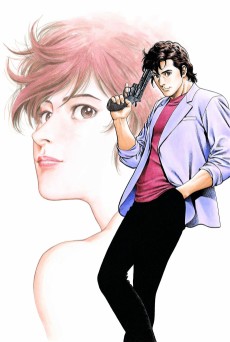
City Hunter
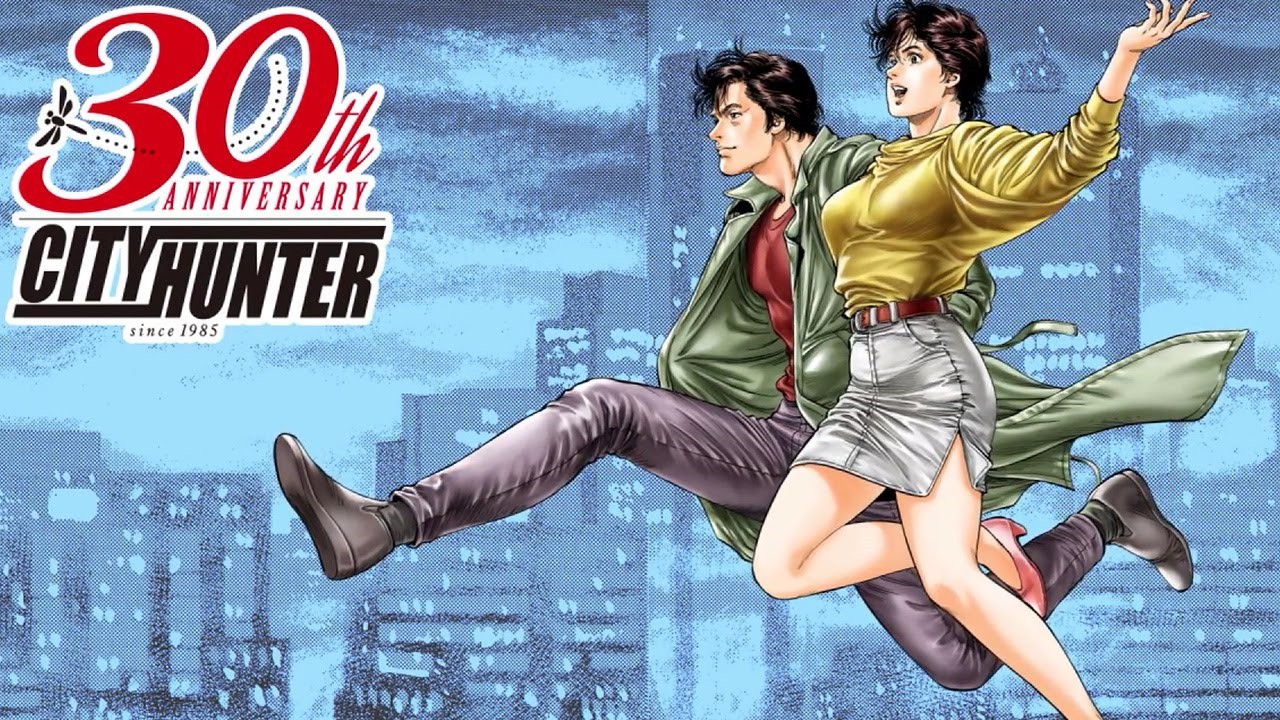
Ryo Saeba works the streets of Tokyo as the City Hunter. He's a "sweeper" and with his sidekick Kaori Makimura, he keeps the city clean. People hire the City Hunter to solve their dangerous problems, which he does with a Colt Python. When Ryo's not working on a case, he's working on getting the ladies, and Kaori must keep him in check with her trusty 10 kg hammer.
(Source: Anime News Network)
📺Anime Details
📝Editorial Analysis
The smell of rain on hot asphalt. A flicker of neon—pink, blue, sickly yellow—bleeding across wet pavement as Ryo Saeba leans against a lamppost, Colt Python glinting under a flickering sign that reads Sakura Bar. He’s just disarmed a hitman with a well-timed kick to the wrist, then immediately tried to flirt with the client’s sister—who responded by swinging her 10 kg hammer so hard the air whistled. Kaori’s sigh cuts through the city’s hum like a blade through silk: “Ryo-san…” That moment—dangerous, ridiculous, deeply human—is City Hunter’s heartbeat.
It doesn’t feel like a shōnen action show. It feels like Tokyo breathing at 2 a.m.: humid, slightly unmoored, humming with unresolved tension and sudden laughter. There’s no grand prophecy, no world-ending threat—just crime, gossip, bad decisions, and the quiet exhaustion of people who’ve seen too much but still show up for work. The slapstick isn’t cartoonish—it’s physical, consequential: Ryo’s nose bleeds when Kaori swings; his jacket rips when he dives off a balcony; his ego bruises faster than his ribs. And beneath it all, something tender and unspoken lingers—the way he never lets Kaori take the first shot, how he pockets stray coins for street kids, how he always walks her home even after she’s threatened him with structural damage. It’s melancholic exploration disguised as farce—urban loneliness wrapped in a leather jacket and a terrible pickup line.
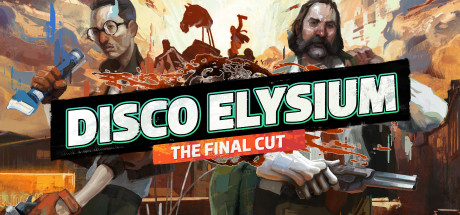
Disco Elysium - The Final Cut shares that same bruised, self-aware gravity. Its description calls it “a groundbreaking role playing game” where you’re “a detective with a unique skill system… and a whole city to carve your path across.” Like Ryo, you’re not saving the world—you’re negotiating with a drunk, deciphering graffiti, trying not to collapse under your own contradictions. The player review nails it: “Capital has the ability to subsume all critiques into itself. Even those who would critique capital end up reinforcing it instead.” That’s Ryo too—working within Tokyo’s grime, cleaning up its messes while never pretending the system isn’t rigged. Both are neon noir not because of lighting, but because they bathe moral ambiguity in electric light and let it shimmer, unjudged.
Max Payne and Max Payne 2: The Fall of Max Payne resonate in their tactical warfare and mystery & detective bones—but more crucially, in their melancholic exploration. Max is framed, hunted, grieving—yet he keeps moving, cracking jokes mid-gunfight, narrating his own unraveling with weary irony. The description says he’s “a man with nothing to lose in the violent, cold urban night”—exactly how Ryo moves through Shinjuku, all sharp angles and practiced nonchalance. And that player review about passing the controller after death? That’s the slapstick of City Hunter made tactile: failure isn’t tragic—it’s shared, absurd, part of the rhythm. Max Payne 2’s subtitle—The Fall of Max Payne—mirrors Ryo’s perpetual near-fall: every episode ends with him upright, yes—but barely, hair mussed, tie askew, Kaori’s hammer hovering inches from his skull.
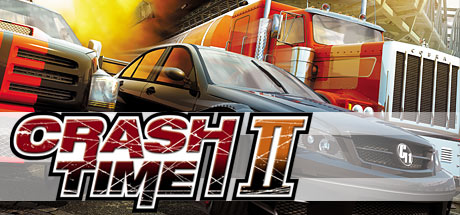
Crash Time 2, despite its janky controls and “awful” physics (per the player review), taps into the same comedy & parody and mystery & detective DNA—but through sheer, defiant silliness. You’re an Autobahn police officer doing “high-speed chases, escort missions, and criminal investigations” across a “large free-roaming map.” It’s not polished—but neither is Ryo’s office, which doubles as a love nest, a weapons locker, and a place to nap on a futon while Kaori files complaints with the local precinct. The review’s frustration—“ngl, boys, this one aint it”—feels like Kaori reading Ryo’s latest expense report: exasperated, affectionate, utterly committed to the chaos.
This pairing isn’t for fans of “cool heroes” or “tight narratives.” It’s for the ones who love the weight in a pause before a punchline—the way Ryo’s grin falters for half a second when someone mentions his past, or how Max Payne lights a cigarette in the rain and stares at a photo he won’t touch. It’s for players who replay Disco Elysium just to hear the Thought Cabinet whisper something painfully true, or who drive circles around Frankfurt in Crash Time 2 because the absurdity feels like home. It’s for people who know that the most honest stories aren’t told in climaxes—but in the walk home after the case closes, the hammer resting lightly on a shoulder, the city breathing around you, alive and imperfect and theirs.
🎮53 Games That Match the Vibe






Match Dimensions Explained
❓Frequently Asked Questions
Why does Max Payne 2 keep coming up when I search for games like City Hunter?
Because both lean hard into that rain-slicked, morally gray neon-noir vibe—Max Payne 2’s tragic love story and slow-motion bullet ballet mirror City Hunter’s mix of gritty crime drama and dark humor. You’ll spot the same tone in scenes like Max’s brooding monologues in smoky apartments or the brutal, tactical gunfights in abandoned warehouses—just like Ryo Saeba’s over-the-top yet strangely melancholic takedowns.
Is there a City Hunter game adaptation I can actually play?
No official City Hunter game exists—but Crash Time 2 is the closest unofficial cousin: you play as a sharp-talking, rule-bending cop (like Ryo) chasing criminals across an open city, mixing detective work with absurd comedy and over-the-top action. Its parody tone, neon-lit chases, and self-aware dialogue hit that same satirical, pulpy energy—even if the controls are janky (per player reviews).
How does Disco Elysium compare to Max Payne for City Hunter fans?
Disco Elysium trades Max’s bullet-time brawls for internal monologues and existential detective work—but both nail the 'melancholic exploration' and 'mystery & detective' dimensions City Hunter fans love. Think less 'Ryo flipping a car mid-chase', more 'Harry DuBois interrogating a pigeon while questioning late capitalism'—but with the same razor-sharp writing and world-weary charm.
What’s the best City Hunter-like game if I just want stylish, moody nighttime action with zero chill?
Assassin’s Creed™: Director’s Cut Edition—it’s got that brooding, neon-noir atmosphere, stealthy rooftop navigation, and tactical tension that mirrors Ryo’s cool-headed chaos. You’ll feel it in every silent leap across Damascus rooftops at dusk, or when drawing your hidden blade mid-conversation—less slapstick, more haunting beauty, but same electric sense of being hunted and hunting.